
For beverage manufacturers looking for a compact and medium-speed can filling and seaming machine, the 18-4 configuration combines filling and can seaming in one rotary system.
The machine uses 18 filling valves and 4 seaming heads and is commonly specified for a production range of approximately 6,000–8,000 cans per hour, depending on the beverage, can size, filling technology, and operating conditions.
This configuration can be considered for craft breweries, carbonated beverage producers, energy drink manufacturers, water and tea producers, and contract packers that need a continuous canning solution without moving directly to a larger industrial system.
What Is an 18-4 Can Filling and Seaming Machine?
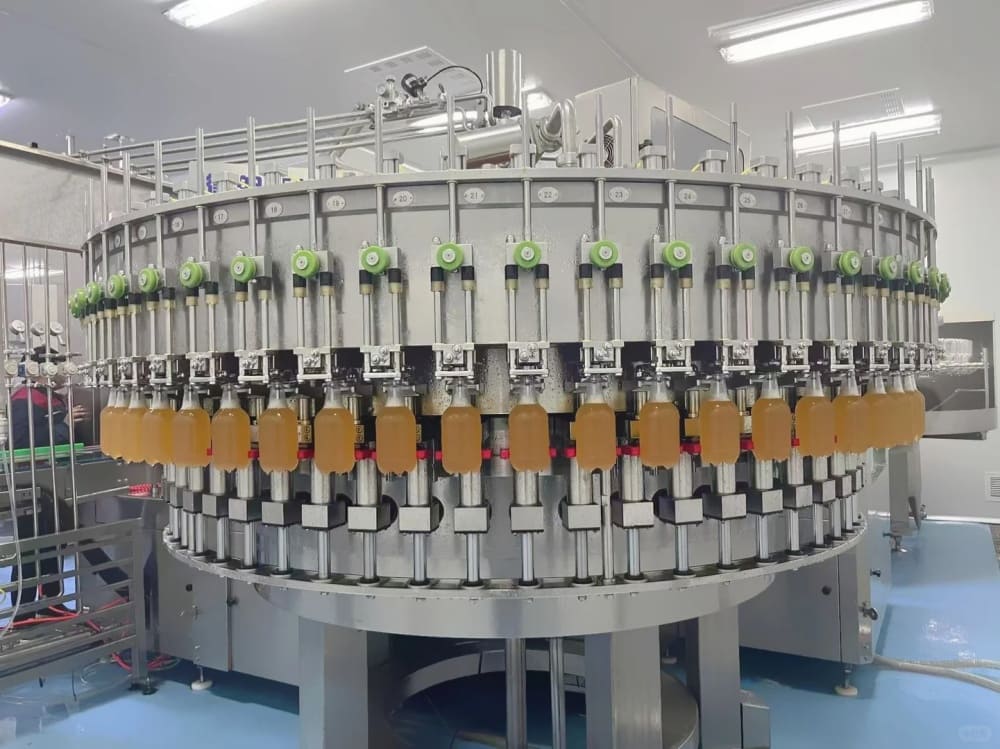
An 18-4 can filling machine is a rotary monoblock system that integrates two major operations:
- Beverage filling
- Can seaming
The number 18-4 refers to the machine configuration:
- 18 filling valves
- 4 seaming heads
Depending on the product, the filling system can be configured for different filling principles, such as counter-pressure filling for carbonated beverages, suitable low-pressure filling configurations for sensitive products, or gravity filling for selected non-carbonated beverages.
After filling, the cans are transferred to the seaming section, where the easy-open lid is mechanically seamed onto the can body.
This integrated configuration reduces the need for separate filling and seaming machines and provides a compact solution for medium-speed beverage canning.
Main Technical Specifications
The following specifications represent the configuration described for the 18-4 model. Final parameters should be confirmed according to the selected machine configuration and product.
| Parameter | Specification |
|---|---|
| Machine Type | Rotary can filling and seaming machine |
| Configuration | 18 filling valves + 4 seaming heads |
| Stated Capacity | 6,000–8,000 cans/hour |
| Can Diameter | Φ52–Φ73 mm |
| Can Height | 80–160 mm |
| Filling Methods | Counter-pressure, suitable low-pressure configurations, or gravity filling |
| Filling Accuracy | Approximately ±2 ml under specified test conditions |
| Main Material | Food-grade SUS304 stainless steel |
| Product Contact Parts | 316L stainless steel |
| Installed Power | Approximately 5.5–7.5 kW depending on configuration |
| Compressed Air | Approximately 0.6 m³/min at 0.6 MPa |
| CIP | CIP-compatible configuration available |
Actual filling accuracy, production capacity, compressed-air consumption, and energy consumption should be confirmed according to the beverage formulation, can specification, filling temperature, pressure, and final machine configuration.
How Does the 18-4 Can Filler Reach 6,000–8,000 Cans per Hour?
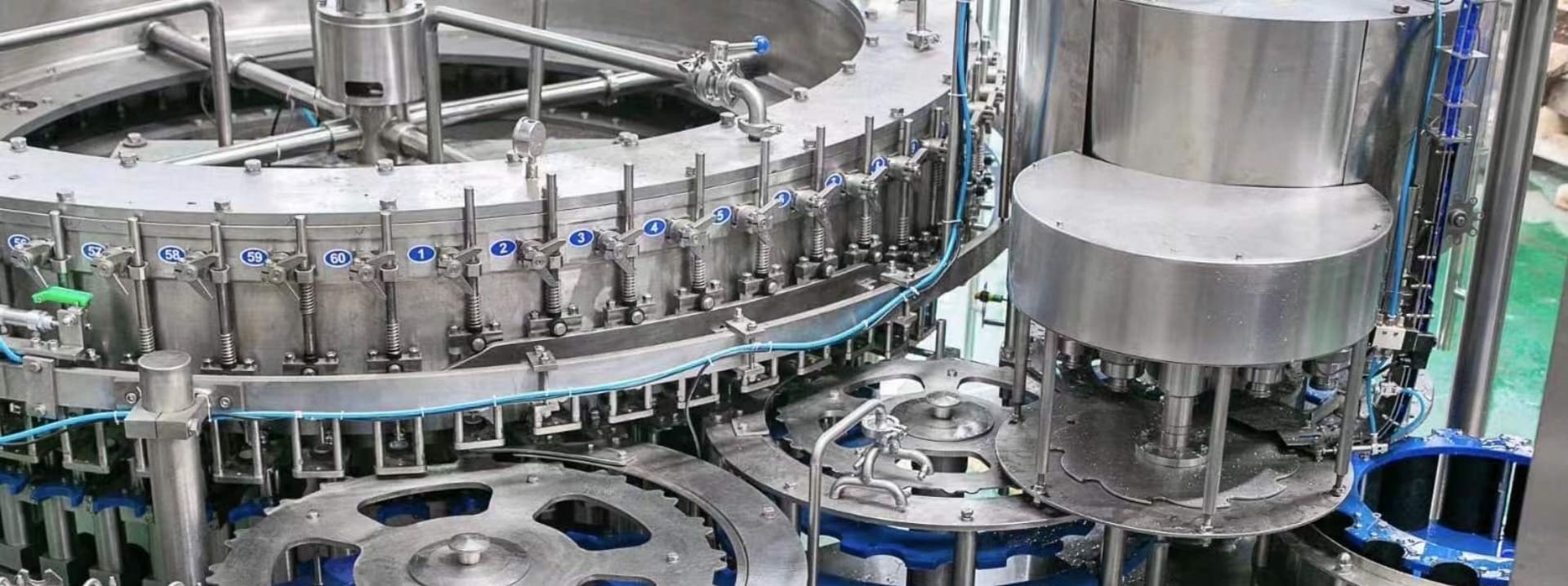
The production capacity of a rotary can filling machine is influenced by the number of filling valves, machine speed, filling time, seaming configuration, and product characteristics.
The 18-4 configuration is designed for continuous rotary operation.
Rotary Continuous Operation
The rotary filling system continuously moves cans through the filling area, helping reduce idle time between individual filling cycles.
18 Filling Valves
The 18 filling valves allow multiple cans to be processed during each rotation of the filling carousel.
This makes the system suitable for medium-speed beverage production.
Four Seaming Heads
Four seaming heads operate in the downstream seaming section.
The filling and seaming operations are coordinated so that cans can move continuously through the machine.
Controlled Can Lifting
The can lifting system supports stable positioning during filling.
For carbonated beverages, controlled movement is particularly important because excessive turbulence can increase foaming and affect filling performance.
At a nominal speed of 7,000 cans/hour, the average throughput is approximately one can every 0.51 seconds. This is a production-rate calculation rather than a guarantee of individual filling-cycle time.
Filling Technology for Different Beverages
The filling method should be selected according to the characteristics of the beverage.
Carbonated Beverages
Counter-pressure filling is commonly used for carbonated drinks because the can is pressurized before filling.
This helps reduce excessive foaming and supports better CO₂ retention.
Typical applications include:
- Carbonated soft drinks
- Soda
- Sparkling beverages
- Carbonated energy drinks
- Beer
Beer
For beer, oxygen control is an important consideration.
The filling system can be configured around counter-pressure filling and suitable gas management processes. Actual dissolved oxygen performance depends on the complete process, including deaeration, container preparation, filling parameters, product temperature, and downstream handling.
Non-Carbonated Beverages
Selected non-carbonated products may use gravity or other suitable filling methods.
Applications can include:
- Drinking water
- Tea beverages
- Certain juice drinks
- Non-carbonated functional beverages
The final filling method should be determined according to viscosity, foaming characteristics, product temperature, and hygiene requirements.
Key Advantages of the 18-4 Configuration
1. Compact Filling and Seaming Design
Integrating filling and seaming into one machine can reduce equipment footprint and simplify the connection between two important packaging stages.
2. Medium-Speed Production
With a stated range of 6,000–8,000 cans/hour, the 18-4 configuration can fit production projects that require more capacity than a small canning system but do not require a high-capacity industrial filler.
Actual output should always be verified using the specific can size and product.
3. Multiple Can Formats
The machine can be configured for different can dimensions within its applicable range.
For example, 330 ml, 440 ml, and 500 ml cans may require different height or changeover components.
The exact compatible can dimensions should be confirmed before ordering.
4. CIP-Compatible Design
For beverage production, hygienic cleaning is essential.
A CIP-compatible filling system can allow suitable product-contact areas to be cleaned through controlled circulation without requiring complete machine disassembly.
The actual CIP procedure, cleaning chemicals, temperature, circulation time, and validation requirements should be determined according to the beverage and sanitary process.
Applications of the 18-4 Can Filling Machine
The 18-4 configuration can be used in several beverage packaging applications.
Craft Breweries
The machine can be considered for breweries that need a continuous canning system for beer production.
Counter-pressure filling is generally appropriate for carbonated beer products.
Carbonated Soft Drinks
For CSD production, counter-pressure filling can help manage carbonation during filling.
Typical products include cola, soda, sparkling drinks, and flavored carbonated beverages.
Energy Drinks
Energy drinks may require careful filling control because of foaming and product characteristics.
The final filling configuration should be selected according to the specific formulation.
Water and Tea Beverages
For suitable non-carbonated products, the machine can be configured for an appropriate filling method.
This makes the 18-4 system potentially suitable for canned water, tea, and other non-carbonated beverages.
Optional Equipment for a Complete Can Canning Line
The 18-4 can filling and seaming machine is normally integrated with other equipment to form a complete beverage canning line.
Depending on the product, a line may include:
Empty Can Depalletizing → Can Rinsing → Filling → Seaming → Pasteurization if Required → Cooling → Drying → Labeling or Coding → Packaging → Palletizing
Optional equipment can include:
Empty Can Rinser
An air or water rinsing system can help remove foreign particles from empty cans before filling.
Lid Handling System
An automatic lid feeder can reduce manual lid handling and improve continuous production.
Fill-Level Inspection
An inspection system can check filling levels and reject products outside the defined parameters.
Seam Inspection
Can seam inspection equipment can monitor seaming quality and identify potential defects.
These inspection systems can be particularly useful when consistent package quality is important.
18-4 vs. 12-4 and 24-6 Can Filling Machines
The appropriate configuration depends on the required production capacity.
| Model | Filling Valves | Seaming Heads | Typical Stated Capacity | Typical Application |
|---|---|---|---|---|
| 12-4 | 12 | 4 | 4,000–5,000 cans/hour | Small breweries and pilot-scale production |
| 18-4 | 18 | 4 | 6,000–8,000 cans/hour | Medium-speed beverage production |
| 24-6 | 24 | 6 | 10,000–15,000 cans/hour | Higher-capacity industrial production |
These figures are reference ranges rather than universal production guarantees. Actual capacity depends on beverage type, can size, filling temperature, carbonation, machine configuration, and operating conditions.
For this reason, equipment selection should be based on the complete production requirement rather than machine speed alone.
How to Select an 18-4 Can Filling Machine
Before purchasing an 18-4 can filling machine, prepare the following information:
- Beverage type
- Carbonated or non-carbonated product
- Can diameter
- Can height
- Can volume
- Target production capacity
- Filling temperature
- Product viscosity
- Carbonation level
- Required filling accuracy
- Available power supply
- Compressed-air conditions
- Factory layout
- Required downstream packaging equipment
For carbonated products, additional information about carbonation level and filling pressure should also be provided.
For beer and other oxygen-sensitive products, the complete filling and gas-management process should be evaluated rather than considering the filler alone.
Conclusion
The 18-4 can filling and seaming machine combines 18 filling valves and 4 seaming heads in a compact rotary system.
With a stated production range of 6,000–8,000 cans/hour, it can be considered for medium-speed production of beer, carbonated soft drinks, energy drinks, water, tea, and other canned beverages.
The actual production capacity and filling performance depend on the beverage formulation, can dimensions, filling technology, temperature, carbonation, and machine configuration.
For a complete project, the filler and seamer should be integrated with suitable can handling, inspection, coding, packaging, and cleaning systems.
FAQ
What is an 18-4 can filling machine?
An 18-4 can filling machine is a rotary monoblock system with 18 filling valves and 4 seaming heads. It combines beverage filling and can seaming in one integrated machine.
What is the capacity of an 18-4 can filler?
The stated capacity is approximately 6,000–8,000 cans per hour, depending on the product, can format, filling method, and operating conditions.
What beverages can be filled by an 18-4 can filling machine?
The machine can be configured for products such as beer, carbonated soft drinks, energy drinks, water, tea, and other suitable canned beverages.
Can the 18-4 machine fill 330 ml and 500 ml cans?
It can be configured for different can sizes within its applicable dimensional range. Changeover components and settings may be required for different can formats.
Is the 18-4 can filler suitable for beer?
Yes. A suitable counter-pressure filling configuration can be used for beer. The complete process should also consider oxygen management, beer temperature, carbonation, and can preparation.
What is the difference between an 18-4 and a 24-6 can filler?
The main difference is the number of filling valves and seaming heads, which affects the machine’s potential production capacity. The final choice should be based on the required output and product specifications.
Can the 18-4 can filling machine be integrated into a complete canning line?
Yes. It can be integrated with empty-can handling, rinsing, pasteurization, cooling, drying, coding, packaging, and palletizing equipment according to the project requirements.
Request an 18-4 Can Filling and Seaming Solution
Planning a 6,000–8,000 cans/hour beverage canning line?
Zhongyilong can help configure a can filling and seaming solution based on your beverage type, can size, production capacity, filling method, and factory layout.
Please send us your beverage type, can volume, can dimensions, target capacity, and factory location for a customized equipment proposal.
WhatsApp: +86 191 3817 1383
Email: zhongyilong@zylpacking.com