
The demand for reliable bottled water production equipment continues to grow in markets where safe, convenient and professionally packaged drinking water is increasingly important. For medium- to large-scale bottled water factories, a complete automatic production line can help improve production efficiency, reduce manual operations and maintain consistent product quality.
For a bottled water project in Libya, Zhongyilong Machinery provides a production solution designed for 7,000 bottles per hour, using 500ml PET bottles as the main packaging format. The complete system covers water treatment, PET bottle blowing, bottle rinsing, filling, capping, labeling, coding and secondary packaging.
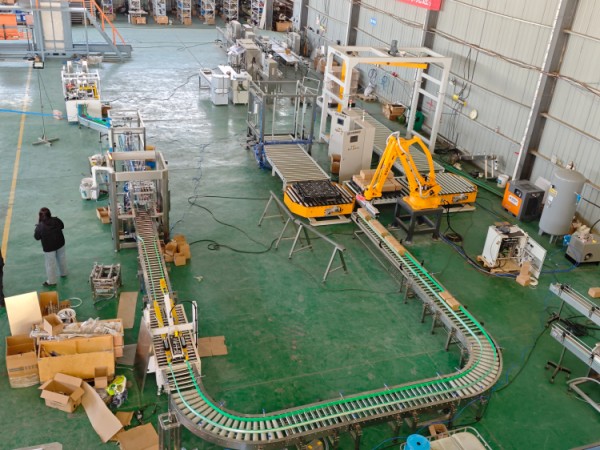
7000 Bottles/Hour Bottled Water Production Line Overview
A 7,000 bottles/hour production line is suitable for bottled water manufacturers looking to establish or expand a commercial-scale PET bottled water factory.
The referenced Libya project is configured for 500ml PET bottles and integrates multiple production stages into one continuous system. The equipment configuration includes a water treatment system, automatic PET bottle blowing equipment, a 3-in-1 rinsing-filling-capping machine, labeling equipment, inkjet coding equipment and automatic film packaging.
The water treatment section includes a water treatment integrated machine, constant-pressure water supply pump and ozone generator. The treatment system uses quartz sand filtration, activated carbon filtration, resin filtration and RO membranes, with automatic flushing and online water-quality monitoring. The supplied configuration specifies a production capacity of approximately 2 t/h for the water treatment system.
Main Equipment Configuration
1. Water Treatment System
Water quality is the foundation of bottled water production. The water treatment section prepares the source water before it enters the filling process.
The referenced configuration includes:
- Water treatment integrated machine
- Quartz sand filtration
- Activated carbon filtration
- Resin filtration
- RO membrane filtration
- Security filtration
- Raw water pump
- Automatic flushing system
- Flow meter
- Online water-quality monitoring
- Ozone generator
- Constant-pressure water supply system
The system uses eight 4040 RO membranes and incorporates automatic control components. An ozone generator is also included for water treatment and disinfection requirements.
2. PET Bottle Blowing System
For factories that want greater control over PET bottle production, an automatic bottle blowing system can be integrated into the production line.
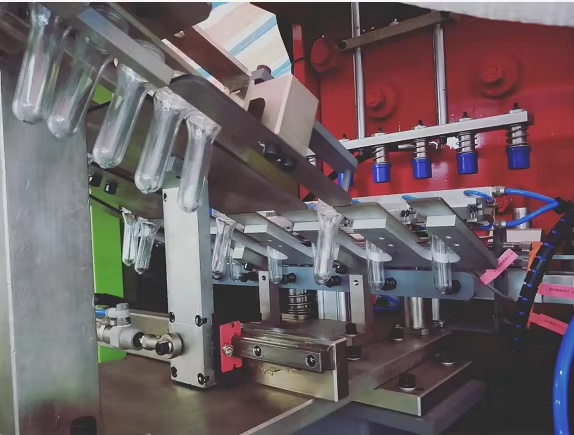
The Libya project configuration includes an automatic bottle blowing machine with a preform unscrambler and a one-out-four configuration. Supporting equipment includes high-pressure air compressors, high-pressure air storage, high-pressure air drying and filtration, a low-pressure screw compressor, low-pressure air storage and a chiller.
This configuration allows PET preforms to be processed into finished bottles before entering the water bottling section.
3. Automatic Rinsing, Filling and Capping
The core of the bottled water production line is the automatic rinsing, filling and capping system.
The specified machine is an 18-18-6 3-in-1 filling machine, equipped with:
- 18 bottle rinsing heads
- 18 filling heads
- 6 capping heads
- Production capacity of approximately 6,000 bottles/hour
- Light inspection
- Automatic cap elevator
The equipment is designed for continuous bottle rinsing, water filling and bottle capping. The configuration also specifies compatible bottle neck dimensions for the applicable bottle formats.
For manufacturers evaluating a 500ml PET bottle filling machine, this type of integrated 3-in-1 configuration can reduce the number of separate manual handling steps between rinsing, filling and capping.
4. Labeling, Coding and Packaging
After filling and capping, bottles can be transferred through the downstream packaging section.
The referenced line includes a round-bottle self-adhesive labeling machine, an inkjet printer for automatic production-line coding and a fully automatic film wrapping machine.
These machines provide the basic functions required for commercial bottled water packaging, including product identification, batch or date coding and secondary packaging.
Production Line Integration
A complete bottled water factory requires more than individual machines. Equipment must be properly connected through pipelines, electrical systems, control cabinets, conveyors and supporting utilities.
For this project, the engineering section includes SUS304 stainless steel pipelines and fittings, electrical cables, a control cabinet, stainless steel cable trays, stainless steel conveyors with engineering-plastic chain plates, power heads and a low-pressure air compressor.
The installation and commissioning service is also included as part of the project configuration, while international transportation is handled separately according to the project arrangement.
Why Choose a Complete Bottled Water Production Line?
For a commercial bottled water factory, integrating the main processes into one production line offers several practical advantages.
Higher production efficiency: Automated conveying and processing reduce unnecessary manual bottle handling.
Consistent filling operations: An integrated rinsing, filling and capping machine helps maintain a continuous production process.
Better hygiene management: Stainless steel product-contact and pipeline components are suitable for hygienic beverage production environments.
Simplified factory management: Integrating water treatment, bottle production, filling and packaging allows operators to manage the production process as a complete system.
Flexible project configuration: Equipment capacity and configuration can be selected according to water source, bottle size, required output, factory layout and local operating conditions.
Bottled Water Production Solution for Libya
For a bottled water project in Libya, equipment selection should consider the local water source, required production capacity, bottle specifications, utilities, factory space and packaging requirements.
The referenced project uses 500ml PET bottles and a production target of approximately 7,000 bottles/hour, with the overall configuration covering water treatment, bottle blowing, filling, capping, labeling, coding and packaging.
A complete project should be engineered according to the actual raw water analysis and factory conditions rather than selecting equipment based only on nominal production capacity.
Conclusion
A 7000 bottles/hour bottled water production line provides a practical solution for manufacturers producing 500ml PET bottled drinking water at commercial scale. The complete configuration can integrate water treatment, PET bottle blowing, rinsing, filling, capping, labeling, coding and secondary packaging into one coordinated production system.
For a new bottled water factory or production expansion project, Zhongyilong Machinery can develop the equipment configuration according to the required bottle size, production capacity, water source and factory layout. The referenced Libya project demonstrates a complete equipment approach for establishing an automated PET bottled water production operation.