
Liquid filling is a fundamental process in modern manufacturing. It transfers liquids into bottles, cans, jars, pouches, and other containers with controlled speed, volume, and consistency.
From drinking water and beverages to cosmetics, pharmaceuticals, and industrial chemicals, different products require different filling technologies. Selecting the right liquid filling machine can improve production efficiency, reduce product loss, and maintain consistent packaging quality.
For beverage manufacturers, filling technology is also closely related to the product itself. For example, carbonated beverages generally require pressure-controlled filling, while still beverages can often use gravity filling.
For a more specific application, see our guide to [Can Filling Machine: Types, Selection Guide and Cost], which explains can filling technologies, production capacity, and equipment selection in greater detail.
What Is Liquid Filling?
Liquid filling is the controlled process of dispensing a specific amount of liquid into a container.
A modern filling system controls factors such as:
- Filling volume
- Liquid flow rate
- Filling time
- Container positioning
- Foam and splash control
- Product contact and hygiene
The correct filling method depends largely on liquid viscosity, carbonation, foaming characteristics, temperature, container design, and required production capacity.
Low-viscosity liquids such as water can be filled using relatively simple high-speed systems, while thick products such as sauces and creams require more controlled dosing technologies.
How Does the Liquid Filling Process Work?
Although filling lines vary according to the product and equipment configuration, a typical process follows several basic stages.
1. Product Preparation
Before filling, manufacturers check the liquid’s viscosity, temperature, cleanliness, and other relevant properties. Filtration or other pretreatment may be required depending on the product.
2. Liquid Transfer
The product is transferred to the filling machine tank through pumps or gravity. Maintaining a stable product supply helps the filling system achieve consistent results.
3. Container Handling
Empty containers enter the line manually or automatically. Conveyors position and align them beneath the filling valves or nozzles.
4. Filling
The filling system dispenses a controlled quantity of liquid into each container. The filling method is selected according to product characteristics and required accuracy.
5. Control and Inspection
Sensors, flow meters, timers, or volume-control systems monitor the filling operation. Automated inspection can identify problems such as incorrect filling levels or damaged containers.
6. Capping and Sealing
After filling, containers are capped or sealed. Labeling, coding, inspection, and secondary packaging can then be integrated into a complete liquid packaging line.
Main Liquid Filling Methods
Different products require different filling principles. The six common methods below cover a wide range of industrial applications.
Gravity Filling
Gravity filling uses the natural flow of liquid from a product tank into the container.
It is particularly suitable for low-viscosity, non-carbonated liquids such as:
- Drinking water
- Juice
- Iced tea
- Liquid beverages
- Other free-flowing products
Its simple structure can provide high production efficiency while keeping maintenance relatively straightforward.
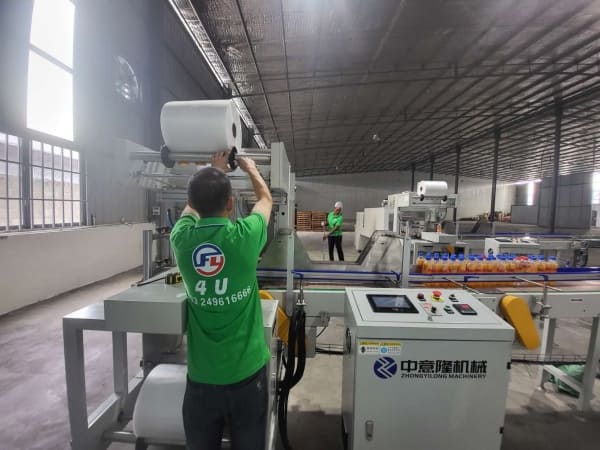
For example, a complete [Ghana 6,000 Bottles/Hour Mineral Water Line] can integrate water treatment, filling, capping, and downstream packaging equipment into one production solution.
Isobaric Filling
Isobaric, or counter-pressure, filling is primarily used for carbonated beverages.
The container is pressurized before filling so that its internal pressure is close to the product pressure. This helps control foaming and reduce carbonation loss.
Typical applications include:
- Beer
- Carbonated soft drinks
- Sparkling water
- Carbonated energy drinks
Vacuum Filling
Vacuum filling removes or reduces air inside the container before liquid enters.
It can be useful for certain glass-bottle applications and oxygen-sensitive products where air exposure needs to be controlled.
Single-chamber and multi-chamber configurations can be selected according to production speed and filling requirements.
Pressure Filling
Pressure filling uses applied pressure to move liquid into the container.
It is suitable for some viscous or difficult-to-flow products that may not perform well with simple gravity filling.
Pump and nozzle design are important because incorrect pressure or flow conditions can cause splashing, air pockets, or inconsistent filling.
Piston Filling
Piston filling uses a mechanical piston to measure and dispense a defined volume.
It is well suited to thicker products such as:
- Sauces
- Creams
- Pastes
- Thick personal-care products
The controlled piston stroke provides good repeatability and allows the system to accommodate different container volumes.
Overflow Filling
Overflow filling focuses on achieving a consistent visible liquid level rather than simply delivering an identical volume.
This makes it useful for transparent containers where visual consistency is important.
Common applications include cosmetics, household chemicals, and selected beverage products.
How to Choose the Right Liquid Filling Method
The best filling technology depends on several factors rather than one specification.
| Application | Typical Product | Recommended Method | Main Considerations |
|---|---|---|---|
| Food & Beverage | Water, juice, carbonated drinks | Gravity / Isobaric | Speed, hygiene, foam control |
| Pharmaceutical | Precise or sensitive liquids | Piston / Vacuum | Accuracy, contamination control |
| Cosmetics | Viscous or semi-viscous products | Piston / Overflow | Consistency, appearance |
| Chemicals | Corrosive or viscous liquids | Pressure / Piston | Safety, material compatibility |
Product Viscosity
Viscosity is one of the first factors to evaluate. Water-like products can generally flow easily, while thick liquids require controlled dosing and stronger pumping systems.
Carbonation and Foaming
Carbonated beverages require pressure-controlled filling to maintain product quality. Foamy products may also require special nozzle and filling-speed control.
Container Type
Bottle material, shape, neck size, and volume can affect filling equipment selection. Glass bottles, PET bottles, cans, and pouches may require different handling systems.
Production Capacity
A small producer may benefit from a compact filling machine, while a large factory may require a fully automatic rotary filling system integrated with conveyors, capping, labeling, and packaging equipment.
For integrated beverage projects, a [3-in-1 Automatic Filling Line] can combine rinsing, filling, and capping into one synchronized machine, helping reduce floor space and improve line efficiency.
Hygiene and Material Compatibility
Food, beverage, pharmaceutical, and chemical applications have different hygiene and material requirements. Stainless-steel construction, suitable product-contact materials, and convenient cleaning systems should be evaluated during equipment selection.
Liquid Filling Machine Selection: Key Takeaways
A suitable liquid filling machine should match the product, container, production target, and operating environment.
Gravity filling is generally suitable for many low-viscosity still liquids, while isobaric filling is preferred for carbonated beverages. Vacuum filling can help with selected oxygen-sensitive applications, while piston and pressure filling provide better control for thicker products.
The right solution should also consider filling accuracy, production speed, changeover requirements, cleaning, automation, maintenance, and future production expansion.
Rather than selecting equipment based only on price or rated speed, manufacturers should evaluate the complete filling process and total production line. A properly matched system can improve filling consistency, reduce waste, simplify operation, and provide more reliable long-term production performance.
FAQ
What is liquid filling?
Liquid filling is the process of accurately dispensing liquid products into containers such as bottles, cans, jars, and pouches using controlled filling equipment.
Which filling method is best for water?
Gravity filling is commonly suitable for low-viscosity, non-carbonated products such as water. The final equipment configuration depends on production capacity, container type, and required filling accuracy.
Which filling method is used for carbonated beverages?
Isobaric or counter-pressure filling is commonly used for carbonated beverages because it helps control pressure, reduce foaming, and retain carbonation.
What type of machine is suitable for thick liquids?
Piston filling and pressure filling are commonly considered for viscous products such as sauces, creams, and pastes. The final choice depends on viscosity and dosing requirements.
What should I consider when buying a liquid filling machine?
Consider the liquid’s viscosity and carbonation, container specifications, required production capacity, filling accuracy, automation level, cleaning requirements, material compatibility, changeover time, and after-sales support.