
Modern beverage processing equipment enables manufacturers to prepare, process, fill, and package beverages efficiently and consistently. From juice and soft drinks to dairy and functional beverages, each production line must be configured according to the product formulation, processing requirements, packaging format, and target capacity.
A complete system can connect ingredient preparation, mixing, heat treatment, filling, packaging, cleaning, and quality control into one coordinated operation.
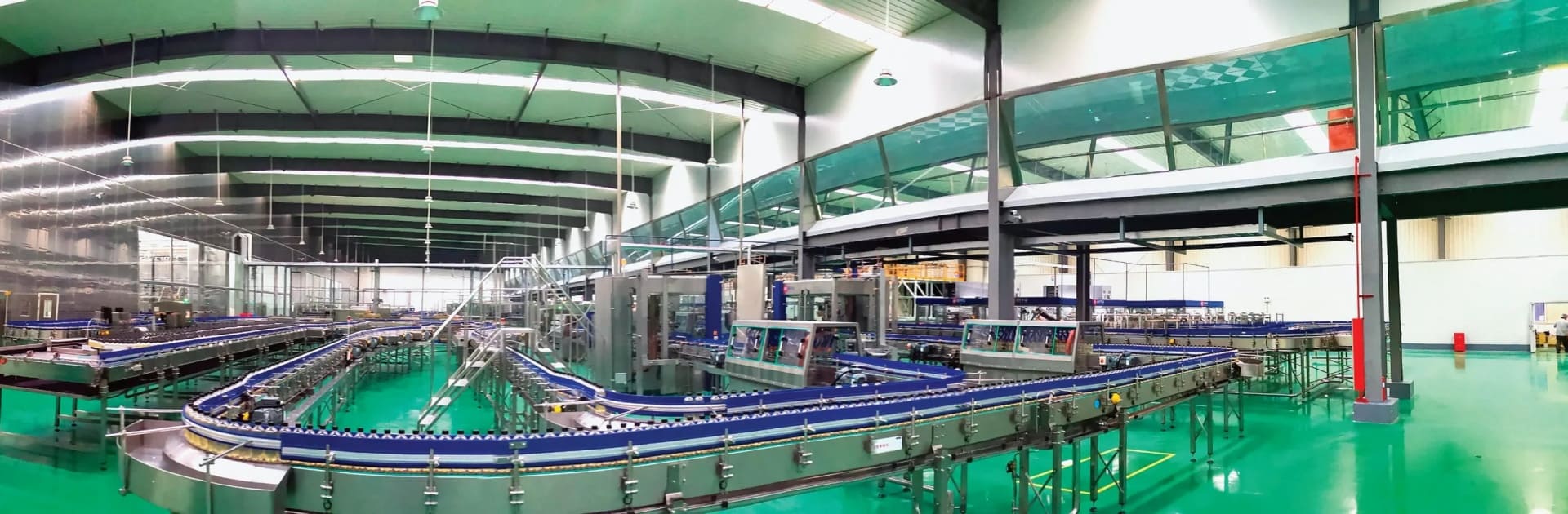
Beverage Processing Workflow
Although the exact process varies by product, most beverage production lines include several core stages.
1. Ingredient Preparation
This stage may include water treatment, syrup preparation, fruit pulping or extraction, ingredient dosing, and milk standardization.
2. Mixing and Homogenization
Mixing tanks combine ingredients according to the formulation. Homogenization may be added when the product contains fats, emulsions, or suspended components that require greater physical stability.
3. Pasteurization or UHT Treatment
Pasteurization and ultra-high-temperature (UHT) processing provide controlled heat treatment for beverages that require microbiological safety and extended shelf life. The required temperature and holding time depend on the product and process design.
4. Filling and Packaging
After processing, the beverage is transferred to the filling section. Depending on the product and container, the line may use gravity, volumetric, piston, overflow, or counter-pressure filling.
The containers are then capped, labeled, coded, inspected, and packed.
5. Quality Control
Sensors and inspection systems can monitor key parameters such as temperature, pressure, flow, filling volume, and packaging condition. Laboratory or batch testing can provide additional quality verification.
Essential Beverage Processing Equipment
The equipment required depends on the beverage, but the following systems are commonly integrated into modern production lines.
Mixing and Blending Systems
Mixing tanks prepare beverage formulations by combining water, concentrates, sugar, flavors, stabilizers, dairy ingredients, or other components. Agitation and tank configuration are selected according to the product.
Pasteurizers and UHT Systems
These systems provide controlled thermal treatment for products requiring heat processing. Selection depends on product characteristics, capacity, temperature requirements, and packaging technology.
Carbonation Systems
Carbonators add controlled CO₂ to products such as soft drinks, soda, and sparkling water. For carbonated beverages, the carbonation system must be coordinated with pressure-controlled filling equipment.
Rinsing, Filling, and Capping Systems
This section handles the primary packaging process. Containers can be rinsed before filling, accurately filled according to the selected technology, and sealed with the appropriate cap.
Labeling and Packaging Systems
After capping, automatic labeling equipment applies product information and branding. Shrink wrapping, cartoning, or other secondary packaging systems then prepare finished products for handling and distribution.
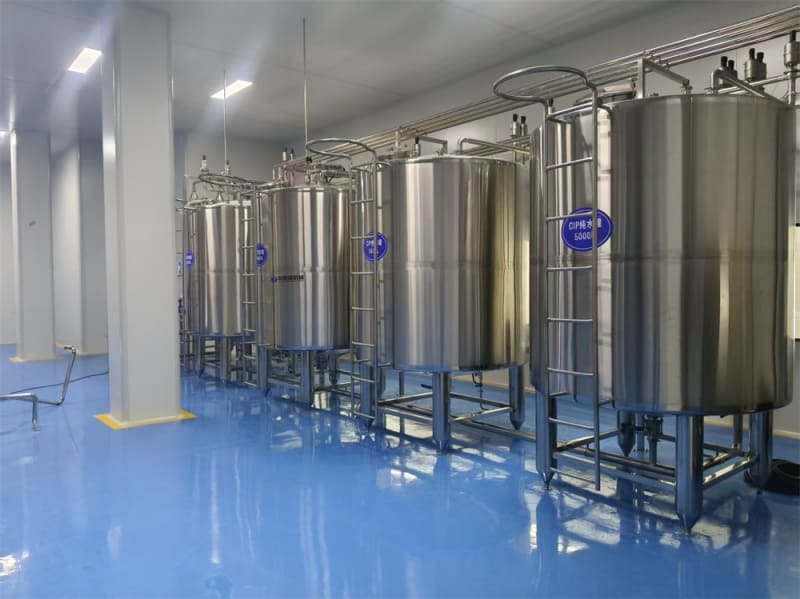
CIP Systems
Clean-in-Place (CIP) systems clean product-contact tanks, pipelines, pumps, and other equipment without extensive dismantling. They are particularly important for hygienic beverage production.
Benefits of Automated Beverage Processing
Automation connects individual machines into a coordinated production system and can provide several operational benefits.
Higher Production Efficiency
Automated processing, filling, and packaging equipment can operate at controlled speeds with less manual intervention.
Consistent Product Quality
Automated ingredient dosing, mixing, temperature control, and filling help maintain more consistent production conditions.
Improved Hygiene
Reducing unnecessary product contact can support hygienic manufacturing practices.
Lower Labor Requirements
Automation reduces repetitive manual tasks, allowing operators to focus on monitoring, quality control, and production management.
Real-Time Monitoring
PLC controls, sensors, and monitoring systems can track key process parameters and provide alerts when operating conditions move outside predefined ranges.
How to Choose Beverage Processing Equipment
Equipment selection should begin with the product and production objectives rather than individual machine specifications.
Beverage Type and Formulation
Juice, dairy beverages, carbonated drinks, tea, and functional beverages can require different processing technologies. Viscosity, suspended solids, fat content, carbonation, and heat sensitivity should all be considered.
Production Capacity
The target output determines the required processing capacity and line speed.
Large factories may require fully automated systems for continuous production, while smaller operations may benefit from semi-automatic or modular configurations.
Packaging Format
PET bottles, glass bottles, cans, cups, and other containers require different handling and filling configurations. Container size, shape, neck dimensions, and closure type should be defined during line design.
Automation Level
A production line can range from semi-automatic equipment to a fully integrated system with automated material handling, processing, filling, inspection, and packaging.
Factory Layout
Available floor space, utility connections, material flow, operator access, cleaning requirements, and future expansion should be considered before equipment is finalized.
Supplier Support
A qualified beverage equipment manufacturer should be able to provide technical consultation, line integration, installation, commissioning, training, and after-sales support according to the project scope.
Beverage Processing Equipment for Different Products
Juice
Juice production may require fruit preparation, extraction or pulping, blending, homogenization, pasteurization, filling, and packaging. The actual configuration depends on whether the product is NFC, concentrated, particulate, or another formulation.
Soft Drinks
A carbonated soft drink line typically combines water treatment, syrup preparation, blending, carbonation, counter-pressure filling, capping, labeling, and secondary packaging.
Dairy Beverages
Dairy processing can include milk standardization, mixing, homogenization, pasteurization or UHT treatment, hygienic filling, and CIP cleaning.
Functional Beverages
Functional and specialty drinks may require customized ingredient dosing, blending, thermal processing, or specialized filling depending on their formulation and packaging.
Beverage Equipment Maintenance
Regular maintenance helps protect production efficiency and equipment reliability.
Key practices include:
- Routine inspection: Check seals, gaskets, valves, pumps, sensors, and moving components.
- Cleaning: Follow appropriate CIP or manual cleaning procedures to control product residue.
- Calibration: Check sensors, valves, flow meters, and other measurement components according to maintenance schedules.
- Spare parts: Keep critical replacement parts available to reduce unplanned downtime.
- Operator training: Ensure operators understand normal operation, cleaning procedures, and basic troubleshooting.
A structured maintenance program can help extend equipment service life and maintain stable production performance.
Energy-Efficient Beverage Processing
Energy and water efficiency are increasingly important for beverage factories, particularly at large production volumes.
Heat Recovery
Suitable heat recovery systems can reuse thermal energy from processing streams to reduce heating demand.
Variable-Speed Drives
Variable-speed pumps and motors can adjust output according to actual operating requirements and help optimize energy consumption.
Water-Efficient CIP
Optimized cleaning programs can reduce water and chemical consumption while maintaining the required hygiene standard.
Insulated Tanks and Pipelines
Proper insulation helps reduce heat loss during thermal processing and product transfer.
These technologies can contribute to lower operating costs when applied appropriately to industrial beverage processing systems.
Designing a Complete Beverage Processing Line
For a new beverage factory, the individual machines should be designed as one integrated system rather than selected independently.
A typical process may follow:
Water Treatment → Ingredient Preparation → Mixing → Homogenization → Pasteurization/UHT → Carbonation → Filling → Capping → Labeling → Inspection → Packing
Not every product requires every stage. For example, a still juice line may not need carbonation, while a carbonated soft drink line requires pressure-controlled filling.
The final configuration should be based on product characteristics, capacity, packaging, factory layout, cleaning requirements, and automation goals.
Conclusion
The right beverage processing equipment provides the foundation for efficient and consistent beverage manufacturing. Instead of focusing on individual machines, manufacturers should consider how processing, filling, packaging, cleaning, and quality control work together as one system.
Product formulation, production capacity, packaging format, automation level, factory conditions, hygiene requirements, and energy consumption should all be evaluated during the design stage.
A properly engineered beverage processing line can then provide a scalable production platform for juice, soft drinks, dairy beverages, functional drinks, and other liquid products.
FAQ
What equipment is needed for beverage production?
Depending on the product, a beverage line may include water treatment, mixing tanks, homogenizers, pasteurizers or UHT systems, filling and capping machines, labeling equipment, CIP systems, inspection equipment, and packaging machines.
What is a complete beverage processing line?
It is an integrated system that connects the main processing and packaging stages, from ingredient preparation through final product packaging.
What equipment is used for juice production?
A juice line may include fruit preparation, pulping or extraction, blending, homogenization, pasteurization, filling, capping, labeling, and packaging.
What equipment is required for carbonated soft drinks?
A typical soft drink line includes water treatment, syrup preparation, blending, carbonation, counter-pressure filling, capping, labeling, and secondary packaging.
How should beverage processing equipment be selected?
Consider the beverage formulation, viscosity, carbonation, processing temperature, production capacity, container type, automation requirements, factory layout, and future expansion plans.
Do all beverage production lines use the same equipment?
No. Equipment configuration varies according to the product and process. Juice, carbonated beverages, dairy products, and functional drinks can require different processing and filling technologies.