
Aluminum cans continue to gain popularity across the global beverage industry because they are lightweight, recyclable, easy to transport, and effective at protecting beverages from light and oxygen. They are widely used for beer, carbonated soft drinks, sparkling water, energy drinks, ready-to-drink beverages, and other packaged drinks.
For beverage manufacturers, however, selecting the right can filling machine is not simply a matter of choosing the highest production speed.
The filling technology must match the beverage. Production capacity must match both current demand and future growth. Can sizes, filling accuracy, seam quality, changeover time, cleaning, maintenance, and after-sales support also have a direct impact on production efficiency and operating costs.
Since 2010, ZHONGYILONG Machinery, based in Zhumadian, China, has focused on beverage filling equipment and complete canning solutions. The company exports equipment to more than 40 countries and provides can filling machines for different beverage applications.
This guide explains how can filling machines work, which filling technology is suitable for different beverages, how to select the right equipment, and what to consider before purchasing.
Main Types of Can Filling Machines
The best can filling machine depends primarily on two factors:
- The characteristics of the beverage
- The required production capacity
Filling machines can therefore be classified according to their filling principle and production speed.
Isobaric Can Filling Machine
Isobaric, or counter-pressure, filling is mainly used for carbonated beverages.
Before filling, the can is sealed against the filling valve and pressurized with CO₂ until the pressure is close to the pressure inside the product tank. The liquid can then enter the can under controlled pressure.
This process helps reduce foaming and carbonation loss while limiting oxygen pickup.
Typical applications include:
- Beer
- Carbonated soft drinks
- Sparkling water
- Hard seltzer
- Carbonated RTD beverages
For products with significant carbonation, an isobaric can filling machine is generally the preferred filling solution.
Gravity Can Filling Machine
Gravity filling uses the natural flow of liquid from an elevated product tank into the can.
Because it does not require the same pressure-control system used for carbonated beverages, gravity filling can provide a simpler and more economical solution for still beverages.
Typical applications include:
- Fruit juice
- Iced tea
- Still energy drinks
- Plant-based beverages
- Functional beverages
- Other low-viscosity non-carbonated drinks
Gravity filling is particularly suitable when carbonation retention is not required.
Vacuum or Hybrid Filling
Vacuum and hybrid filling systems are less common in modern beverage canning lines but can be used for specialized applications.
Vacuum assistance can help with filling-level control, while hybrid systems combine different filling principles for specific beverage characteristics.
For most mainstream beverage applications, however, manufacturers generally select either isobaric filling for carbonated products or gravity filling for still products.
Can Filling Machine Capacity
Production capacity is normally measured in cans per minute (CPM) or cans per hour (CPH).
A practical classification is:
| Production Level | Typical Capacity | Suitable Application |
|---|---|---|
| Small-scale | Below 120 CPM | Startups, craft producers, test production |
| Medium-scale | 120–300 CPM | Regional and growing beverage brands |
| High-speed | 300–600+ CPM | Large-volume beverage production |
Small producers may benefit from compact and semi-automatic equipment, while larger factories typically require high-speed rotary filling systems.
When planning a new production line, it is also important to consider future demand rather than designing only for today’s production volume.
Which Can Filling Machine Is Right for Your Beverage?
The beverage determines the filling principle.
| Beverage | Recommended Filling Technology | Main Reason |
|---|---|---|
| Beer | Isobaric | Maintains carbonation and controls foam |
| Carbonated soft drinks | Isobaric | Preserves CO₂ during filling |
| Sparkling water | Isobaric | Reduces carbonation loss |
| Hard seltzer | Isobaric | Controls foam and carbonation |
| Fruit juice | Gravity | Suitable for still beverages |
| Iced tea | Gravity | Simple and gentle filling |
| Still energy drinks | Gravity | Suitable for non-carbonated products |
| Plant-based drinks | Gravity | Suitable for many still formulations |
For example, a carbonated beverage requires pressure equalization before filling. Using a conventional gravity filler for a highly carbonated product can result in excessive foaming and loss of carbonation.
This is why beverage characteristics should always be evaluated before machine capacity or price.
1. Can Rinsing or Air Blowing
Empty aluminum cans enter the production line and are cleaned using air blowing or a suitable rinsing process.
The purpose is to remove dust, particles, and other residues before filling.
2. Beverage Filling
Filling is the central operation of the canning line.
For carbonated beverages, the can is positioned under the filling valve and sealed. Air may first be removed or displaced using CO₂. The can is then pressurized to approach the product tank pressure.
Once pressure is balanced, the beverage flows into the can in a controlled manner.
After reaching the target filling level, the valve closes and the remaining pressure is released in a controlled manner.
This process helps minimize turbulence, foaming, and carbonation loss.
3. Can Seaming
After filling, the lid is placed on the can and the can moves to the seamer.
The seaming process creates a double seam between the can body and lid. The first operation forms the initial connection, while the second operation compresses the seam to create a tight seal.
Seam quality is critical because an improperly formed seam can result in leakage, contamination, loss of product quality, or pressure-related problems.
4. Discharge and Downstream Processing
After sealing, cans are transferred through conveyors to downstream equipment.
Depending on the beverage and production line configuration, downstream processes can include:
- Date coding
- Can inspection
- Leak detection
- Pasteurization
- Secondary packaging
- Cartoning or case packing
Three Critical Technologies in a Can Filling Machine
Machine performance depends on more than filling speed. Three areas are particularly important.
Filling Accuracy and Foam Control
A modern can filling machine needs to maintain consistent filling levels while minimizing product loss.
The source equipment specifications describe filling accuracy of approximately ±1–2 ml, depending on the filling system and control method.
For carbonated products, counter-pressure control is particularly important because uncontrolled pressure changes can cause excessive foam and carbonation loss.
Double Seam Quality
The can seam is one of the most important quality-control points in the entire canning process.
A reliable double seam should provide:
- Consistent sealing
- Leak prevention
- Pressure resistance
- Protection against contamination
- Stable shelf life
Roller alignment, lid positioning, can material, and seam dimensions all influence the final result.
Regular seam inspection and teardown checks are therefore important for maintaining production quality.
Fast Changeover
Many beverage factories produce multiple products or can formats.
A machine that supports fast changeover can reduce production downtime when switching between different can sizes or recipes.
Useful features include:
- Adjustable guides
- Recipe memory
- Servo controls
- Tool-free adjustments
- Motorized height adjustment
- Automatic parameter recall
The source describes changeover times of less than 30 minutes for suitable configurations. Actual changeover time depends on machine model, can format, and production conditions.
How to Choose the Right Can Filling Machine
Selecting a can filler requires looking beyond the initial purchase price.
1. Determine Required Production Capacity
Start with your actual production target.
For example:
- Small production: below 120 CPM
- Medium production: 120–300 CPM
- Large production: 300–600+ CPM
It is generally better to leave reasonable production capacity for future growth rather than operating a machine continuously at its maximum output.
2. Match the Filling Technology to the Beverage
This is one of the most important decisions.
Carbonated beverages → Isobaric filling
Still beverages → Gravity filling
If the filling principle does not match the beverage, problems such as excessive foam, carbonation loss, inconsistent filling levels, or reduced product quality may occur.
3. Check Can Size Compatibility
Common beverage cans can vary in diameter, height, and format.
Before purchasing equipment, confirm:
- Can diameter
- Can height
- Can volume
- Lid specification
- Required number of SKUs
- Changeover requirements
If a factory plans to produce several formats, multi-size compatibility can provide greater long-term flexibility.
4. Evaluate Automation Level
Semi-automatic equipment can be appropriate for low production volumes.
For higher-volume factories, automatic equipment can reduce labor requirements while improving production consistency.
The correct automation level should be determined by production volume, local labor costs, operating hours, and expected future growth.
5. Consider Hygiene and Cleaning
Food and beverage equipment should be designed for hygienic production.
304 or 316 stainless steel is commonly used for food-contact and structural components depending on the application.
A CIP (Clean-in-Place) system can also simplify cleaning by allowing the product-contact system to be cleaned without extensive equipment disassembly.
6. Evaluate Spare Parts and Technical Support
A machine can have excellent specifications but still become expensive if spare parts are difficult to obtain or technical support is slow.
Before ordering, ask the supplier about:
- Spare parts availability
- Remote technical support
- Installation
- Commissioning
- Operator training
- Maintenance support
- Response time
- Warranty terms
For an export-oriented beverage production line, after-sales service should be considered part of the equipment investment rather than an optional extra.
7. Calculate Total Cost and ROI
The purchase price is only one part of the total investment.
A more complete calculation should consider:
- Machine cost
- Installation
- Transportation
- Utilities
- Labor
- Spare parts
- Maintenance
- Cleaning
- Downtime
- Future production capacity
The original source estimates that small/semi-automatic machines may start around $10,000–$30,000, mid-range automatic lines around $30,000–$80,000, and high-speed systems can exceed $100,000–$200,000+. Actual pricing varies significantly according to filling principle, capacity, automation, can format, auxiliary equipment, and project configuration.
Common Can Filling Machine Purchasing Mistakes
A lower machine price does not necessarily mean a lower production cost.
Avoid these common mistakes:
Choosing Only by Price
Low-cost equipment may have higher maintenance requirements, less automation, or weaker technical support.
Ignoring Seam Quality
A filling machine and seamer must work together to provide reliable package integrity.
Looking Only at Initial Investment
Total cost of ownership includes energy, labor, maintenance, spare parts, downtime, and cleaning.
Not Testing the Equipment
Where possible, request a factory test or production demonstration using your beverage and can specifications.
Ignoring Future Production
A machine that meets today’s demand may become a bottleneck as the business grows.
Underestimating Technical Support
For international projects, spare parts availability and remote support can significantly affect long-term equipment uptime.
These procurement considerations are also highlighted in the original source material.
ZHONGYILONG Machinery Can Filling Machine Solutions
ZHONGYILONG Machinery provides can filling solutions for different beverage applications, from smaller craft production to high-speed commercial beverage lines.
Its equipment range includes isobaric filling machines for carbonated products and gravity filling systems for still beverages.
Can Filling Machine Working Principle
A complete automatic canning process normally includes can preparation, filling, seaming, inspection, and downstream packaging.
Beer Can Filling Machine
The Beer Can Filling Machine is designed for beer canning applications and uses an isobaric filling principle.
The source specifies capacities starting at approximately 1,000–2,000 cans per hour, making the model suitable for smaller-scale beer production and craft brewing applications.
Carbonated Drink Can Filling Machine
The Carbonated Drink Can Filling Machine is designed for carbonated beverages such as soft drinks and sparkling water.
The listed production capacity reaches approximately 10,000 cans per hour, or around 167 CPM.
Its counter-pressure filling process is designed to help control foam, carbonation, and oxygen pickup.
Juice Can Filling Machine
The Juice Can Filling Machine uses gravity filling for still beverages.
It is designed for applications including:
- Fruit juice
- Functional beverages
- Plant-based beverages
- Other non-carbonated drinks
The listed capacity range is approximately 5,000–18,000 cans per hour.
Energy Drink Can Filling Machine Series
The ZHONGYILONG energy drink can filling series includes models such as YDGF30-6 to YDGF44-8.
According to the source, the highest-capacity models can reach approximately 36,000 cans per hour, equivalent to about 600 CPM.
These systems are designed for high-speed production of low-viscosity beverages such as energy drinks, coffee, and tea.
Features described in the source include motorized height adjustment, lube-free lifters, and CIP functions.
Why Consider ZHONGYILONG for a Can Filling Line?
ZHONGYILONG Machinery combines filling equipment with broader beverage production-line capabilities.
The company states that its equipment is exported to more than 40 countries and supports applications across Southeast Asia, the Middle East, Africa, South America, Europe, and North America.
The company’s stated equipment advantages include:
- Servo-controlled operation
- HMI touchscreen control
- Recipe memory
- Fast format changeover
- CIP cleaning
- Multiple beverage applications
- Spare parts support
- Turnkey project capability
For beverage manufacturers, this approach can be useful when the project requires more than a standalone filler—for example, when filling equipment needs to be integrated with water treatment, beverage preparation, sterilization, packaging, and other downstream systems.
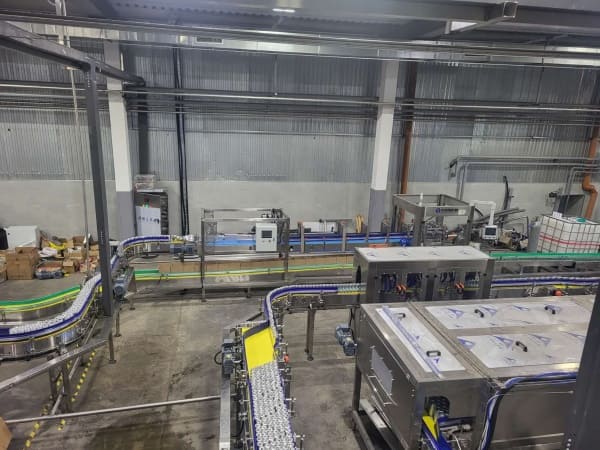
Can Filling Machine: Key Takeaways
Choosing the right can filling machine starts with the beverage rather than the machine itself.
Carbonated products such as beer, CSD, sparkling water, and hard seltzer generally require isobaric filling to control pressure, foam, and carbonation. Still beverages such as juice, iced tea, and non-carbonated energy drinks can often use gravity filling.
Production capacity, can format, automation, filling accuracy, seam quality, cleaning, changeover time, maintenance, spare parts, and technical support should then be evaluated together.
For a new beverage canning project, the most effective approach is to provide the equipment supplier with your beverage type, can size, target production capacity, and packaging requirements. The supplier can then recommend a suitable filling principle and complete line configuration.
FAQ About Can Filling Machines
What is a can filling machine?
A can filling machine is equipment used to automatically fill beverages into aluminum cans. Depending on the product, the machine may use gravity, isobaric, vacuum, or hybrid filling technology.
What type of can filling machine is best for beer?
Beer generally requires an isobaric or counter-pressure can filling machine because pressure control helps reduce foaming and preserve carbonation during filling.
What is the difference between gravity and isobaric filling?
Gravity filling relies primarily on liquid flow from an elevated tank and is commonly used for still beverages. Isobaric filling equalizes pressure between the can and product tank and is mainly used for carbonated beverages.
How fast can a can filling machine operate?
Production speed depends on the machine model and configuration. The source range covers equipment from below 120 CPM for smaller operations to more than 600 CPM for high-speed applications.
How much does a can filling machine cost?
The source gives a broad 2026 reference range of approximately $10,000–$30,000 for smaller machines, $30,000–$80,000 for mid-range automatic systems, and $100,000–$200,000+ for some high-speed systems. Actual project pricing depends on capacity, filling technology, automation, can format, and auxiliary equipment.
What information should I provide when requesting a can filling machine quotation?
At minimum, provide:
- Beverage type
- Carbonated or non-carbonated status
- Can volume
- Can dimensions
- Required cans per hour
- Number of products/SKUs
- Required automation level
- Available factory utilities
- Desired packaging configuration
This information allows the manufacturer to recommend a more accurate machine configuration and production-line solution.