
Choosing the right filling technology is an important part of designing a reliable liquid production line. Different products behave differently during filling. Water flows easily, carbonated beverages require pressure control, while honey, sauces, creams, and other viscous products need a completely different approach.
A suitable liquid filling system should match the product characteristics, container type, required filling accuracy, production capacity, and packaging process.
This guide explains the main liquid filling methods, how they work, where they are used, and how manufacturers can select the appropriate filling equipment for different applications.
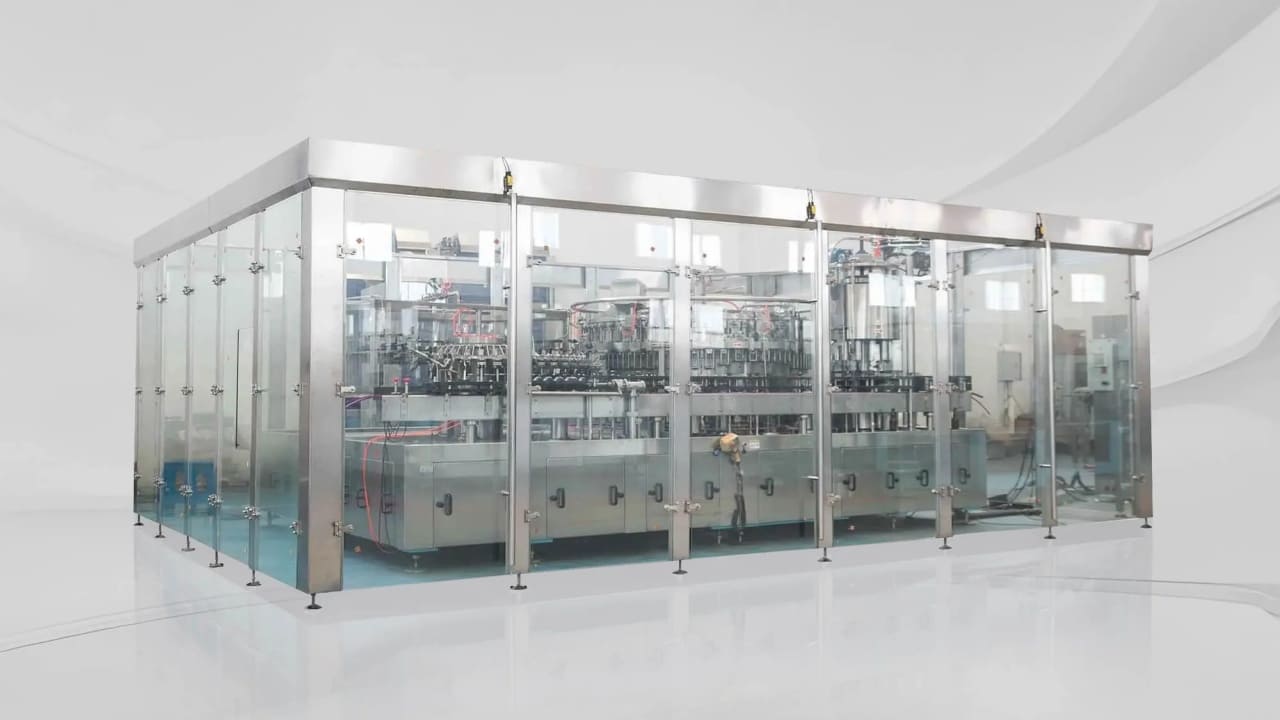
What Are Liquid Filling Methods?
Liquid filling methods are the different technologies used to transfer a controlled amount of liquid from a product tank or supply system into bottles, cans, jars, or other containers.
Common filling technologies include:
- Gravity filling
- Isobaric or counter-pressure filling
- Vacuum filling
- Pressure filling
- Piston filling
- Overflow filling
Each method uses a different principle to control how the product enters the container.
For beverage and food manufacturers, the right choice depends mainly on viscosity, carbonation, foaming characteristics, filling accuracy, container design, and production speed.
1. Gravity Filling
Gravity filling, also called atmospheric filling, uses the natural force of gravity to move liquid from a higher-level product tank into the container.
It is one of the simplest liquid filling methods and is commonly used for low-viscosity, non-carbonated liquids.
Typical Applications
Gravity filling can be used for products such as:
- Still water
- Non-carbonated beverages
- Juice
- Tea
- Milk
- Wine
- Vinegar
- Other free-flowing liquids
Advantages of Gravity Filling
The main advantage is its relatively simple working principle. The equipment does not need the pressure-balancing system required by carbonated beverage filling.
Depending on the product and machine configuration, gravity filling can provide:
- Simple operation
- Easy cleaning and maintenance
- Stable filling performance
- Suitable high-speed production
- Straightforward integration into beverage lines
Gravity filling is therefore commonly considered when the product is thin, free-flowing, and non-carbonated. Industry references also identify gravity filling as a common option for water and other low-viscosity liquids.
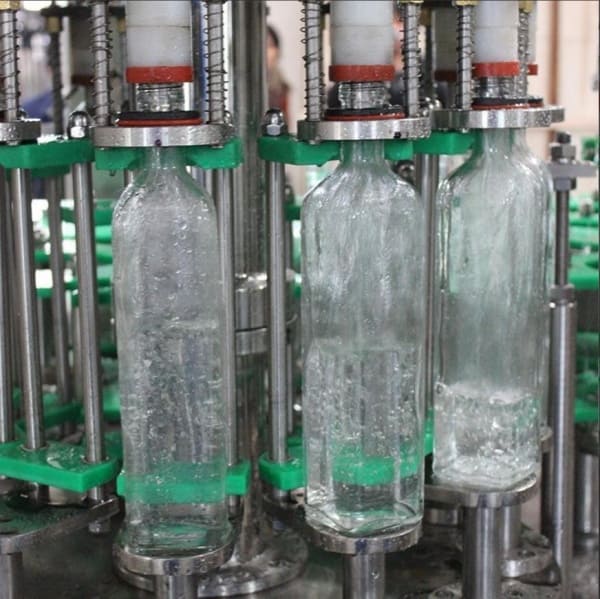
2. Isobaric Filling
Isobaric filling is also known as counter-pressure filling or equal-pressure filling.
This technology is mainly designed for carbonated beverages. Before the beverage enters the container, pressure inside the container is balanced with the pressure of the filling system.
This controlled pressure environment helps reduce the rapid release of dissolved CO₂ and excessive foaming.
Typical Applications
Isobaric filling is widely associated with:
- Carbonated soft drinks
- Cola
- Soda water
- Sparkling water
- Beer
- Other carbonated beverages
Why Isobaric Filling Is Important
Carbonated products behave differently from still liquids. When pressure changes too quickly, dissolved carbon dioxide can come out of the beverage and create excessive foam.
The counter-pressure principle helps control this process during filling.
A typical sequence includes:
- The container is positioned under the filling valve.
- The container is sealed against the filling valve.
- Gas pressure is introduced into the container.
- Container pressure is balanced with the filling system.
- The beverage enters the container under controlled conditions.
- Pressure is released in a controlled manner before sealing.
This is why isobaric filling technology is commonly used for carbonated beverage production lines.
3. Vacuum Filling
Vacuum filling uses a pressure difference to help transfer liquid into the container.
During the filling process, air is removed or reduced inside the container, creating a lower-pressure environment. The pressure difference helps draw the liquid into the bottle.
Typical Applications
Vacuum filling can be considered for selected products and container designs, including:
- Wine
- Certain oils
- Thin liquids
- Products sensitive to air exposure
- Narrow-neck containers
The actual application depends on the product characteristics and the required filling process.
Benefits of Vacuum Filling
Potential advantages include:
- Reduced air exposure
- Controlled filling
- Reduced dripping in some applications
- Suitable for specific container designs
- Potential reduction of oxidation for air-sensitive products
Vacuum filling is one of several established liquid filling technologies, alongside gravity, piston, pump, overflow, and counter-pressure systems.
4. Pressure Filling
Pressure filling uses positive pressure to move liquid from the product supply system into containers.
Compared with simple gravity filling, pressure-assisted systems can provide greater control when dealing with products that do not flow easily.
Suitable Products
Depending on the machine design, pressure filling can be used for:
- Syrups
- Sauces
- Dairy products
- Medium-viscosity liquids
- Food products
- Selected industrial liquids
The exact filling principle should be selected according to viscosity, product behavior, container size, and required production speed.
For products with higher viscosity, other technologies such as piston or pump filling may provide more suitable control.
5. Piston Filling
Piston filling is a volumetric filling method that uses a piston and cylinder to measure and dispense a predetermined amount of product.
During operation, the piston draws product into the cylinder and then pushes the measured quantity through the filling nozzle.
Where Is Piston Filling Used?
Piston fillers are particularly useful for medium- to high-viscosity products, including:
- Honey
- Jam
- Cream
- Sauces
- Syrups
- Gels
- Pastes
- Thick food products
The positive-displacement principle allows the equipment to handle products that cannot flow efficiently through a simple gravity system.
Benefits of Piston Filling
A properly configured piston filling machine can provide:
- Consistent volumetric dosing
- Good repeatability
- Suitability for viscous products
- Flexible filling volumes
- Stable filling performance
Piston filling is widely used where accurate volumetric dosing is more important than relying on natural product flow.
6. Overflow Filling
Overflow filling is designed to achieve a consistent visual fill level inside containers.
The system allows excess product to return through the filling system once the liquid reaches the specified level.
Typical Applications
Overflow filling can be useful when appearance and consistent fill height are important, especially for transparent containers.
Typical products may include:
- Water
- Shampoo
- Cleaning liquids
- Other low- to medium-viscosity products
For transparent bottles, a consistent liquid level can make the finished products appear more uniform on the shelf.
This is different from purely volumetric filling, where the primary objective is to deliver a specific quantity of product.
Liquid Filling Methods Comparison
Different filling technologies are designed for different product characteristics.
| Filling Method | Main Principle | Typical Products | Key Consideration |
|---|---|---|---|
| Gravity Filling | Natural liquid flow | Water, juice, tea | Low-viscosity, non-carbonated products |
| Isobaric Filling | Pressure balancing | Soda, beer, sparkling water | Carbonation control |
| Vacuum Filling | Pressure difference | Wine, selected oils | Air exposure and container design |
| Pressure Filling | Positive pressure | Syrups, dairy, sauces | Medium-viscosity products |
| Piston Filling | Positive displacement | Honey, cream, paste | Accurate volumetric dosing |
| Overflow Filling | Controlled fill level | Water, shampoo, cleaners | Consistent visual level |
The appropriate technology depends on the product rather than simply the desired machine speed. Product viscosity, carbonation, foaming behavior, container characteristics, and filling accuracy all influence the selection.
How to Choose the Right Liquid Filling Method
Selecting a liquid filling machine should begin with the product rather than the equipment itself.
Product Viscosity
Viscosity is one of the most important factors.
Thin liquids such as water can often be handled by gravity or other high-speed filling systems. Thick products such as honey, cream, and paste may require piston or pump-based technology.
Carbonation
If the product contains dissolved CO₂, pressure management becomes critical.
Carbonated soft drinks, sparkling water, and beer commonly require isobaric or counter-pressure filling technology.
Filling Accuracy
Some applications focus mainly on maintaining a consistent visual fill level, while others require precise volumetric or weight-based dosing.
The required accuracy should therefore be established before selecting the filler.
Container Type
Bottle shape, neck size, material, and container volume can influence the filling process.
PET bottles, glass bottles, cans, jars, and other containers may require different filling configurations.
Production Capacity
The required output should also be considered.
A small production facility may require a compact or semi-automatic filler, while a large beverage factory may need a fully automatic rotary filling system integrated with rinsing, filling, capping, labeling, and packaging equipment.
Liquid Filling Machine and Production Line Integration
A liquid filling machine normally works as part of a larger production system rather than as an isolated machine.
For beverage production, a complete line may include:
- Water treatment system
- Product preparation or blending
- Product storage
- Bottle rinsing
- Liquid filling
- Capping
- Labeling
- Date coding
- Shrink wrapping or secondary packaging
- Palletizing
The filling equipment should therefore be compatible with upstream processing and downstream packaging equipment.
For example, a carbonated beverage production line requires coordination between beverage preparation, carbonation, pressure control, isobaric filling, capping, and packaging.
Liquid Filling Equipment for Different Industries
Liquid filling technology is used across many industries.
Beverage Industry
Common applications include:
- Bottled water
- Juice
- Tea
- Carbonated soft drinks
- Sparkling water
- Beer
- Dairy beverages
Food Industry
Filling systems can also be configured for:
- Sauces
- Syrups
- Edible oils
- Dressings
- Jam
- Liquid food products
Chemical and Daily Chemical Products
Depending on material compatibility and machine configuration, filling equipment may also be used for:
- Cleaning liquids
- Detergents
- Personal care products
- Other liquid chemical products
The filling method should always be selected according to the physical and chemical characteristics of the product.
Automatic Liquid Filling Machine vs. Semi-Automatic Equipment
The level of automation should match production requirements.
A semi-automatic liquid filling machine can be suitable for smaller production volumes, flexible product development, or applications where operators need greater control.
An automatic liquid filling machine is more appropriate when continuous production, higher output, and integration with other packaging equipment are required.
For large beverage projects, an automatic filling system can be integrated with bottle handling, filling, capping, labeling, packaging, and palletizing equipment.
Why Filling Technology Matters
The filling process directly affects production efficiency and final package quality.
An unsuitable filling method can lead to problems such as:
- Excessive foaming
- Inconsistent fill levels
- Product dripping
- Slow production
- Filling inaccuracies
- Product loss
- Difficult changeovers
A correctly selected system can help manufacturers achieve more stable production while matching the characteristics of the product and container.
For this reason, selecting liquid filling equipment should be treated as an engineering decision rather than simply a machine purchase.
How to Select a Liquid Filling Machine Manufacturer
When purchasing industrial filling equipment, buyers should evaluate more than the machine itself.
Important factors include:
- Experience with similar products
- Production capacity
- Filling technology
- Container specifications
- Material and hygiene requirements
- Automation level
- Line integration capability
- Installation and commissioning support
- Operator training
- After-sales service
- Spare parts availability
For a complete beverage project, working with an equipment manufacturer that can provide the filling machine together with related processing and packaging equipment can simplify project coordination.
Liquid Filling Solutions from ZHONGYILONG
ZHONGYILONG provides beverage and liquid filling solutions for different production requirements.
Depending on the product and project specifications, the filling system can be designed around factors such as:
- Product type
- Bottle size
- Production capacity
- Filling technology
- Automation requirements
- Factory layout
- Packaging requirements
For beverage manufacturers, the filling machine can be integrated into a complete production line covering product processing, bottle handling, filling, capping, labeling, and secondary packaging.
The final configuration should be determined from the actual product characteristics and production requirements rather than using a single filling method for every application.
Conclusion
There is no single liquid filling method suitable for every product.
Gravity filling is commonly associated with thin, non-carbonated liquids. Isobaric filling is designed for carbonated beverages where pressure control is important. Vacuum filling uses a pressure difference for selected applications, while piston filling is well suited to viscous products requiring controlled volumetric dosing. Overflow filling focuses on consistent liquid levels, and pressure-based systems can provide additional control for selected products.
The right liquid filling machine should be selected according to product viscosity, carbonation, filling accuracy, container design, production capacity, and overall production-line requirements.
For manufacturers planning a new beverage or liquid production line, a detailed product and packaging assessment is the best starting point for selecting the appropriate filling technology.
FAQ
What are the main liquid filling methods?
The main methods include gravity filling, isobaric filling, vacuum filling, pressure filling, piston filling, and overflow filling.
Which liquid filling method is suitable for carbonated beverages?
Isobaric or counter-pressure filling is commonly used for carbonated beverages because it controls the pressure difference between the container and filling system, helping reduce excessive foaming and carbonation loss.
What type of filling machine is suitable for thick liquids?
Piston filling is commonly used for medium- to high-viscosity products such as honey, cream, sauces, gels, and pastes because it uses positive displacement to control the filling volume.
What is the difference between gravity filling and isobaric filling?
Gravity filling relies mainly on natural liquid flow and is commonly used for non-carbonated products. Isobaric filling balances pressure before and during filling and is mainly used for carbonated beverages.
Is overflow filling the same as gravity filling?
Not exactly. Both can be used for free-flowing liquids, but overflow filling is designed primarily to achieve a consistent visible fill level, while gravity filling can use different control principles depending on the machine configuration.
How do I choose the right liquid filling equipment?
Start with the product’s viscosity, carbonation, foaming behavior, filling accuracy, container type, production capacity, and required automation level. These factors help determine the most suitable filling technology.
Can one filling machine handle different liquid products?
Some filling systems can be configured for multiple products, but the practical range depends on viscosity, product characteristics, filling volume, container design, and changeover requirements. A technical assessment should be completed before selecting the equipment.