
Reverse osmosis (RO) is one of the most widely used membrane technologies for producing purified water from municipal water, groundwater, brackish water, and seawater. However, a reverse osmosis system is not simply a high-pressure pump combined with RO membranes. Its performance depends on the complete treatment process, including pretreatment, chemical dosing, pressure control, membrane selection, post-treatment, automation, and regular maintenance.
For industrial water treatment projects, choosing the right RO technology requires a clear understanding of the source water and the required product water quality.
A system designed for low-salinity municipal water, for example, should not be configured in the same way as a brackish water reverse osmosis (BWRO) system or a seawater reverse osmosis (SWRO) system.
This guide explains how reverse osmosis works, how the major RO system types differ, which operating parameters matter most, and how proper pretreatment and maintenance influence long-term performance.
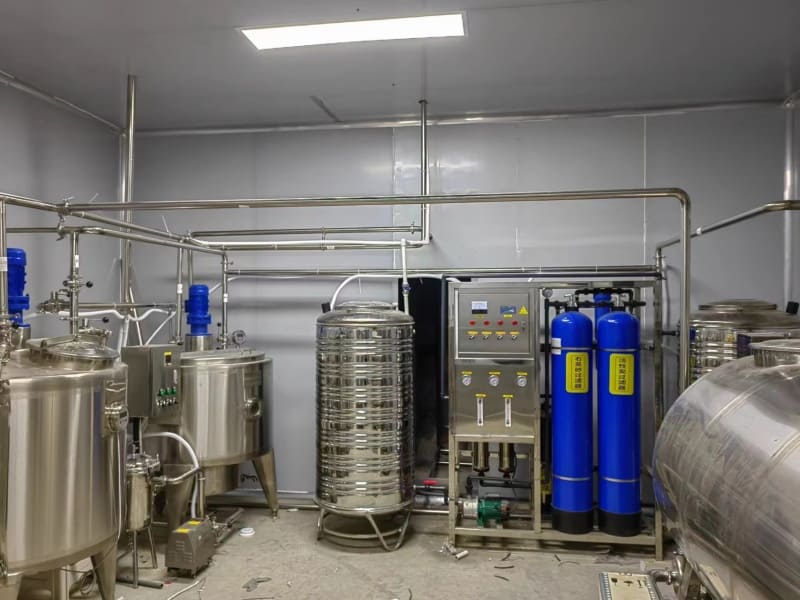
What Is Reverse Osmosis?
Reverse osmosis is a pressure-driven membrane separation process based on the selective permeability of a semipermeable membrane.
In natural osmosis, water moves through a semipermeable membrane toward the side with a higher concentration of dissolved substances. Reverse osmosis reverses this process by applying external pressure greater than the osmotic pressure of the feed water.
The pressure forces water molecules through the RO membrane while dissolved salts and other contaminants are retained.
According to the technical material provided, RO can remove more than 99% of total dissolved solids (TDS) under appropriate operating conditions and can also effectively retain microorganisms, heavy metal ions, colloids, and organic substances.
The higher the salt concentration of the feed water, the greater the osmotic pressure. This is one of the fundamental reasons why different water sources require different RO system designs.
The Four Key RO Operating Indicators
Four parameters are particularly important when evaluating RO system performance:
- Operating pressure
- Water recovery rate
- Salt rejection rate
- Permeate flow rate
Together, these indicators provide a practical view of treatment capacity, water quality, energy performance, and system operating condition.
How Does an Industrial RO System Work?
The training material identifies six major functional modules:
Although the configuration varies according to the source water, the basic architecture of a reverse osmosis water treatment system follows several common stages.
- Pretreatment system
- High-pressure pumping system
- RO membrane system
- Post-treatment system
- Electrical and automatic control system
- Chemical dosing system
This integrated approach is important because the RO membrane is only one part of the complete water treatment process.
1. Raw Water Tank and Feed Water Pump
The raw water tank provides a buffer between the incoming water source and the treatment system.
It helps stabilize water flow and provides sufficient water for downstream equipment. Automatic level control can also protect the feed pump from running dry.
The raw water pump then supplies the pressure required by the pretreatment equipment, including multimedia and activated carbon filters.
Stable feed pressure is important because insufficient flow or pressure can reduce filtration performance and interfere with the operation of the entire RO system.
2. Pretreatment: The First Line of RO Membrane Protection
Pretreatment is one of the most important parts of an RO water treatment system.
The RO membrane is sensitive to suspended solids, chlorine, hardness, colloids, organic contamination, and biological growth. If these contaminants are not properly controlled before they reach the membrane, membrane fouling, scaling, oxidation, and premature performance loss can occur.
A typical pretreatment system may include:
- Multimedia filtration
- Activated carbon filtration
- Water softening
- Ultrafiltration
- Cartridge filtration
- Chemical dosing
The exact combination depends on the feed water quality.
Multimedia Filter
A multimedia filter uses different layers of filter media to remove suspended solids, sand, rust, colloids, and other particles.
The supplied technical material specifies target values including turbidity below 1.0 NTU, iron below 0.3 mg/L, manganese below 0.1 mg/L, and SDI below 5.0 for the described pretreatment configuration.
Activated Carbon Filter
Activated carbon provides another important protection stage.
It adsorbs residual chlorine, organic compounds, odors, and other contaminants. Chlorine removal is particularly important because oxidizing agents can damage polyamide RO membrane materials.
The supplied system configuration specifies zero residual chlorine after activated carbon treatment as a membrane protection target.
Water Softener
Where feed water contains significant calcium and magnesium hardness, a softening system can be used to reduce scaling potential.
The supplied material describes ion exchange as the basic softening mechanism, replacing calcium and magnesium ions with sodium ions and reducing water hardness before RO treatment.
Cartridge Filter
The cartridge or security filter acts as the final physical barrier before the high-pressure pump and RO membrane.
The described configuration uses a 5 μm polypropylene filter element to capture fine particles that could otherwise damage downstream components.
According to the training material, a pressure differential above 0.1 MPa indicates that the cartridge filter is becoming clogged and requires replacement.
3. High-Pressure Pump: The Driving Force of RO
The high-pressure pump provides the pressure required to overcome the osmotic pressure of the feed water.
This is particularly important when treating water with higher salt concentrations.
The supplied material describes a three-cylinder ceramic high-pressure plunger pump and highlights high- and low-pressure protection as important safeguards.
The described protection ranges include high-pressure protection from 0.15–6.0 MPa and low-pressure protection at or below 0.05 MPa.
The required operating pressure, however, should always be determined from the actual feed water characteristics, membrane specification, temperature, recovery target, and system design rather than using one pressure value for every project.
Three Main Types of Reverse Osmosis Systems
One of the most important decisions in RO system design is selecting the appropriate technology for the source water.
The three major configurations discussed in the supplied technical material are:
- Conventional RO for low-salinity water
- Brackish Water Reverse Osmosis (BWRO)
- Seawater Reverse Osmosis (SWRO)
Their fundamental difference is the salinity of the feed water and the corresponding pressure and pretreatment requirements.
Conventional RO Water Treatment System
Conventional RO is generally used for relatively low-salinity feed water such as municipal water and certain groundwater sources.
The supplied material describes applications including drinking water treatment, industrial purified water, boiler makeup water, and community water treatment.
For the described configuration, the applicable feed water has TDS up to 500 mg/L and turbidity up to 5 NTU before the full pretreatment process.
Typical Process Flow
Raw Water Tank → Multimedia/Activated Carbon Filtration → 5 μm Cartridge Filter → Antiscalant Dosing → High-Pressure Pump → RO Membrane → Pure Water Tank → UV Sterilization → Product Water
The supplied technical data gives the following reference operating values:
| Parameter | Conventional RO |
|---|---|
| Operating pressure | 0.6–1.0 MPa |
| Recovery rate | 60%–75% |
| Salt rejection | ≥98% |
| Membrane service life | 3–5 years |
This configuration is relatively compact and economical compared with systems designed for high-salinity water.
Brackish Water Reverse Osmosis System
Brackish water contains substantially more dissolved salts than typical municipal water or low-salinity groundwater.
The supplied material defines the applicable feed water range for its BWRO configuration as approximately 500–10,000 mg/L TDS.
Typical applications include drinking water treatment in salt-affected regions, industrial water production, and certain agricultural water treatment projects.
Because hardness and sulfate levels can be higher, scaling becomes a more significant concern.
Consequently, BWRO systems often require stronger pretreatment, including:
- Softening
- Hardness reduction
- Coagulation
- Multimedia filtration
- Activated carbon filtration
- Cartridge filtration
- Antiscalant dosing
- pH adjustment
Reference BWRO Parameters
The supplied material gives:
- Salt rejection: ≥97%
- Recovery rate: 55%–65%
- Operating pressure: 0.8–1.5 MPa
- Feed SDI: ≤5
- Feed turbidity: ≤0.5 NTU
- Residual chlorine: zero
- Membrane service life: up to 2–5 years
The actual design pressure and recovery should still be determined from the membrane manufacturer’s specifications and detailed feed-water analysis.
Seawater Reverse Osmosis System
Seawater reverse osmosis is designed for significantly higher salinity and more demanding operating conditions.
The supplied material identifies seawater with approximately 30,000–45,000 mg/L TDS as the target feed-water range for the described SWRO system. Applications include coastal water supply, island communities, industrial production, and marine or shipboard water supply.
Unlike conventional RO systems, SWRO requires specialized equipment and materials to withstand high pressure and corrosive seawater conditions.
Energy Recovery Is Critical
High-pressure pumping represents a major energy demand in seawater desalination.
For this reason, SWRO systems commonly incorporate an Energy Recovery Device (ERD) to recover pressure energy from the concentrate stream and improve overall energy efficiency.
The supplied material also specifies corrosion-resistant materials such as 316L stainless steel and duplex stainless steel for demanding seawater applications.
Typical SWRO Process
Seawater Intake → Lift Pump → Algae Control/Sterilization → Coagulation/Clarification → Media Filtration → Ultrafiltration → Cartridge Filter → High-Pressure Pump + Energy Recovery → SWRO Membrane → pH/Mineral Adjustment → Product Water
The reference values provided in the training material include:
| Parameter | SWRO |
| Operating pressure | 2.5–8.0 MPa |
| Recovery rate | 30%–40% |
| Salt rejection | ≥99% |
| Membrane service life | 5–7 years |
SWRO therefore requires a substantially different engineering approach from conventional low-salinity RO.
RO vs BWRO vs SWRO: What Is the Difference?
The following comparison summarizes the three configurations described in the supplied technical material:
| Parameter | Conventional RO | BWRO | SWRO |
| Feed TDS | ≤500 mg/L | 500–10,000 mg/L | 30,000–45,000 mg/L |
| Operating pressure | 0.6–1.0 MPa | 0.8–2.5 MPa | 2.5–8.0 MPa |
| Recovery rate | 50%–75% | 50%–65% | 30%–40% |
| Salt rejection | ≥98% | ≥97% | ≥99% |
| Pretreatment | Standard filtration | Softening + enhanced filtration | Algae control + UF + advanced pretreatment |
| Special equipment | — | Softening system | ERD + corrosion-resistant system |
| Main risks | Filter blockage, minor fouling | Scaling and colloidal fouling | Biofouling, corrosion, high-pressure issues |
The important point is that higher feed-water salinity changes almost every major design consideration—from membrane selection and pressure requirements to pretreatment, energy consumption, materials, recovery rate, and maintenance.
Why RO Pretreatment Determines Long-Term Performance
Many RO problems that appear to be membrane problems actually originate upstream.
Poor pretreatment can cause:
- Membrane fouling
- Scaling
- Oxidation damage
- Increased differential pressure
- Reduced permeate flow
- Lower salt rejection
- Higher energy consumption
- Shorter membrane service life
Chemical dosing provides another layer of protection.
The supplied configuration identifies three major chemical protection functions:
Sodium bisulfite (NaHSO₃):
Used to reduce free chlorine and protect the RO membrane from oxidation.
Antiscalant:
Helps control scaling caused by calcium, magnesium, iron, and other scale-forming components.
Non-oxidizing biocide:
Helps control microbial growth and biological fouling.
The dosing strategy should be determined according to feed-water analysis and system operating conditions rather than applying the same chemical program to every installation.
Key RO Performance Indicators to Monitor
A properly designed RO system should be monitored using measurable operating data rather than relying only on visual inspection.
Salt Rejection
Salt rejection indicates how effectively the RO system removes dissolved salts from the feed water.
The supplied reference values are:
- Conventional RO: ≥98%
- BWRO: ≥97%
- SWRO: ≥99%
Recovery Rate
Recovery represents the percentage of feed water converted into product water.
A higher recovery rate can improve water utilization, but excessively high recovery may increase scaling and concentration polarization.
Therefore, recovery should be optimized according to feed-water chemistry, membrane characteristics, and operating conditions.
Transmembrane Pressure and Differential Pressure
Changes in membrane pressure or pressure differential can provide early warning of fouling, scaling, or flow restrictions.
A sudden increase in pressure differential should trigger an investigation rather than simply increasing pump pressure.
Permeate Flow
A decline in permeate flow may indicate:
- Membrane fouling
- Cartridge filter blockage
- Insufficient feed pressure
- Low water temperature
- Scaling
- Other changes in feed-water conditions
The supplied troubleshooting material specifically identifies these factors as common causes of declining production.
RO System Operation and Maintenance
Good maintenance begins before the system starts.
The supplied operating procedure recommends four basic stages:
1. Pre-Startup Inspection
Check:
- Valve positions
- Instrument calibration
- Chemical levels
- Filter condition
- Electrical grounding
- Equipment condition
- Corrosion protection
2. Controlled Startup
The recommended startup sequence is:
Raw Water Pump → Pretreatment → Chemical Dosing → High-Pressure Pump
Pressure should be increased gradually to avoid sudden hydraulic shock to the RO membrane.
3. Routine Monitoring
Pressure, flow, conductivity, and recovery should be recorded regularly.
Changes in equipment noise, leakage, energy consumption, or pressure differential can provide early indications of system problems.
4. Controlled Shutdown
The described shutdown sequence is:
High-Pressure Pump → Chemical Dosing → Raw Water Pump
After shutdown, the system should be depressurized and the membrane system flushed at low pressure to remove concentrated water and reduce the risk of salt deposition.
Common RO Problems and How to Diagnose Them
1. Low Product Water Flow
Possible causes include membrane fouling, blocked cartridge filters, insufficient feed pressure, or low feed-water temperature.
The appropriate response may include replacing clogged filters, restoring the correct operating pressure, and chemically cleaning the membrane when necessary.
2. Reduced Salt Rejection
A decline in water quality may be associated with membrane oxidation, scaling, damaged seals, or deterioration in feed-water quality.
The solution should focus on identifying the root cause rather than simply increasing operating pressure.
3. High System Pressure or Increasing Differential Pressure
Potential causes include:
- Blocked filters
- Pipe restrictions
- Membrane scaling
- Colloidal fouling
- Excessively high recovery
The supplied troubleshooting guidance recommends checking filtration, reducing excessive recovery where appropriate, and carrying out suitable chemical cleaning.
4. Increased SWRO Energy Consumption
For seawater systems, increased energy consumption may be associated with reduced energy recovery efficiency, corrosion or scaling in pipelines, or membrane fouling.
The energy recovery device should therefore be inspected as part of SWRO energy management.
Automation and Control in Modern RO Water Treatment
Automation can significantly improve operational consistency and reduce dependence on manual intervention.
The supplied system design uses PLC and touchscreen controls for:
- Automatic startup and shutdown
- Real-time data collection
- Alarm management
- Pump control
- Equipment interlocking
- Remote monitoring
Variable-frequency drives can also be used for motor speed control, soft starting, and load-based adjustment, helping reduce electrical stress and improve energy management.
For larger industrial water treatment projects, automation should be considered as part of the complete system architecture rather than added after the mechanical design is finished.
How to Choose the Right RO Water Treatment System
The correct RO system should always begin with the feed-water analysis.
Before requesting a technical proposal, it is useful to provide:
- Water source
- TDS
- pH
- Turbidity
- Hardness
- Iron and manganese
- SDI where applicable
- Residual chlorine
- Required product water quality
- Required production capacity
- Daily operating hours
- Factory location
- Available electrical power
- Existing pretreatment equipment
This information allows the engineering team to determine whether conventional RO, BWRO, SWRO, or a combination of treatment technologies is appropriate.
A Practical Selection Logic
Municipal water / low-salinity groundwater
→ Conventional RO
Brackish or high-mineral groundwater
→ BWRO
Seawater
→ SWRO
However, TDS alone should not determine the final design. Hardness, silica, organics, suspended solids, biological activity, temperature, and other water chemistry parameters can also influence membrane selection and pretreatment requirements.
Why a Complete RO Solution Is More Important Than the RO Membrane Alone
An industrial reverse osmosis system is an integrated engineering project.
The membrane is the core separation component, but stable performance depends on the entire system:
Water Source → Pretreatment → Chemical Dosing → High-Pressure Pump → RO Membrane → Post-Treatment → Storage → Distribution
A well-designed system therefore needs to balance:
- Product water quality
- Water recovery
- Energy consumption
- Membrane protection
- Equipment reliability
- Maintenance requirements
- Future expansion
This system-level approach is particularly important for industrial facilities, drinking water projects, coastal installations, and regions where feed-water quality changes seasonally.
Conclusion
Reverse osmosis is not a one-size-fits-all water treatment technology.
The most important difference between conventional RO, BWRO, and SWRO is the feed-water condition, particularly salinity and the resulting osmotic pressure. These differences determine the required operating pressure, membrane configuration, pretreatment process, recovery rate, materials, energy consumption, and maintenance strategy.
For low-salinity water, a conventional RO system can provide an economical and relatively compact purification solution. Brackish water requires stronger scaling control and more robust pretreatment. Seawater requires high-pressure equipment, specialized membranes, energy recovery, and corrosion-resistant materials.
The key to a reliable RO water treatment system is therefore not simply selecting an RO membrane. It is designing the complete treatment process around the actual water source and required product water quality.
For a new industrial water treatment project, a professional engineering evaluation should begin with a detailed feed-water analysis and production requirement. From there, the pretreatment, membrane system, high-pressure equipment, automation, post-treatment, and maintenance strategy can be developed as one integrated solution.
Frequently Asked Questions About RO Water Treatment Systems
What is a reverse osmosis water treatment system?
A reverse osmosis water treatment system uses pressure to force water through a semipermeable membrane. The membrane retains dissolved salts and other contaminants while allowing purified water to pass through.
What is the difference between RO, BWRO, and SWRO?
The primary difference is the feed-water salinity and corresponding system requirements. Conventional RO is used for relatively low-salinity water, BWRO is designed for brackish water, and SWRO is designed for high-salinity seawater.
What is the typical RO recovery rate?
The recovery rate depends on the water source and system design. The supplied technical material gives reference ranges of 50%–75% for conventional RO, 50%–65% for BWRO, and 30%–40% for SWRO.
Why is pretreatment important for RO membranes?
Pretreatment removes suspended solids, chlorine, hardness, colloids, and other contaminants before the water reaches the RO membrane. Proper pretreatment helps reduce fouling, scaling, and membrane damage.
Can RO treat seawater?
Yes. Seawater reverse osmosis is specifically designed for high-salinity seawater. It requires high-pressure equipment, specialized membranes, advanced pretreatment, energy recovery, and corrosion-resistant materials.
How often should RO membranes be cleaned?
Cleaning frequency depends on feed-water quality and operating conditions. The supplied maintenance recommendations include routine flushing and periodic chemical cleaning, with different schedules for conventional RO, BWRO, and SWRO systems.
What information is needed to design an RO water treatment system?
A proper design normally requires feed-water analysis, desired product water quality, treatment capacity, operating schedule, factory conditions, and information about existing equipment.
How can I reduce RO system operating costs?
Operating costs can be controlled through effective pretreatment, optimized recovery, proper chemical dosing, regular filter replacement, membrane cleaning, efficient high-pressure pumping, and—particularly for SWRO—effective energy recovery.