
The ready-to-drink tea market requires more than a filling machine. A reliable production line must coordinate tea extraction, water treatment, formulation, sterilization, filling and packaging according to the final beverage specification.
For a tea beverage project in Russia, the production system was designed for 500ml PET bottled tea with a nominal filling capacity of approximately 2,000 bottles per hour. The project covers the complete process from raw water and tea extraction to finished-product packaging.
The customer plans to develop three types of tea beverages:
- Blended tea with tea extract, concentrated fruit juice, sugar and other ingredients
- Pure tea without additives
- Functional tea beverages containing vitamins or other functional ingredients
Project Overview
The production line combines processing and packaging equipment into one integrated system.
| Item | Project Specification |
|---|---|
| Location | Russia |
| Main package | 500ml PET bottle |
| Filling capacity | Approx. 2,000 BPH |
| UHT capacity | 1,000 L/h |
| Water treatment | 2,000 L/h |
| Tea extraction | 500L extraction tank |
| Finished product tank | 1,000L |
| Filling system | 8-8-3 three-in-one |
| Labeling | Sleeve labeling |
| Packaging | Film shrink wrapping |
The relationship between the filling and sterilization capacity is also important. At 500ml and 2,000 bottles per hour, the nominal filling volume is 1,000 L/h, which matches the specified UHT sterilization capacity.
This provides a practical capacity relationship between the processing and filling sections.
Tea Extraction and Preparation
Tea extraction is the first key processing stage.
The project uses a 500L stainless steel pressure extraction tank equipped with steam heating, insulation, a liquid-level indicator, sanitary connections and automatic bottom discharge for tea residue.
Depending on the tea raw material and extraction process, the extraction system can be configured with a filter basket to improve separation of tea leaves and solid residues.
A dedicated extraction platform provides access for operation and maintenance.
After extraction, the tea liquid is transferred through a 3 t/h product pump and filtration system into a 1,000L tea storage tank.
[Image Placeholder – Tea Extraction Tank and Extraction Platform]
Water Treatment for Tea Beverage Production
Water quality directly affects the taste, stability and consistency of bottled tea.
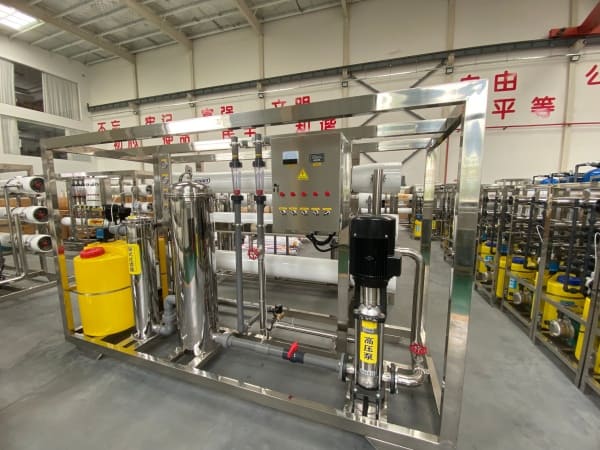
The project includes a 2 t/h water treatment system consisting of pretreatment, activated carbon filtration, scale control, reverse osmosis and pure-water storage.
The system includes:
- Raw water tank
- Quartz sand filter
- Activated carbon filter
- RO system
- Pure water tank
- Ozone generator
- Constant-pressure pump
The pure-water system includes a 24g ozone generator and a 4 t/h constant-pressure pump.
For a Russian beverage factory, the final water-treatment configuration should be confirmed according to the actual source-water analysis rather than using the same configuration for every location.
Blending, Filtration and UHT Sterilization
After tea extraction and water treatment, the ingredients are combined in the blending section.
The project uses two 1,000L stainless steel blending tanks with agitation and insulation. A separate sugar-dissolving system is provided for beverages requiring sugar or other soluble ingredients.
The blended beverage then passes through a filtration system before entering the sterilization stage.
The UHT system has a nominal capacity of 1,000 L/h and uses steam heating and water cooling. Sterilization temperature can be adjusted according to the beverage process requirements.
For pure tea products, membrane filtration is not automatically required. If the finished beverage needs a clear and bright appearance, additional clarification or membrane filtration can be considered. If a natural tea appearance is acceptable, conventional filtration may be sufficient.
500ml PET Bottle Filling and Packaging
The finished beverage is sent to an 8-8-3 three-in-one filling machine, integrating bottle rinsing, filling and capping.
The machine is designed for approximately 2,000 bottles per hour for 500ml PET bottles and uses PLC-based control for coordinated operation.
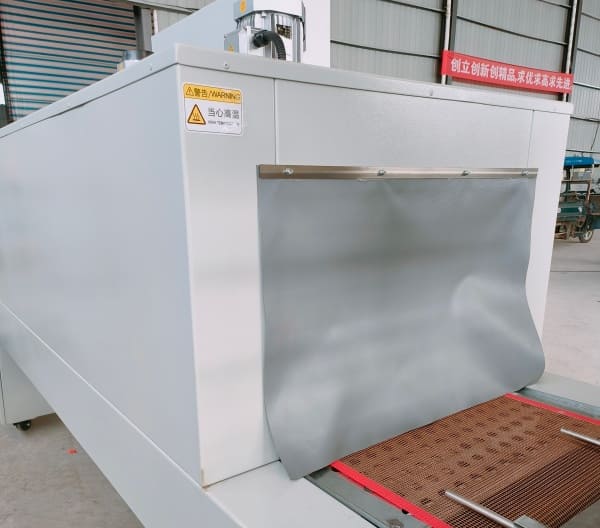
After filling and capping, bottles pass through the sleeve labeling machine and shrink tunnel. A laser coding machine can be used for production information such as batch codes and dates.
The final packaging section uses film shrink wrapping, with packaging configurations including 3×4 or 4×6 packs.
Production Flow
The complete process can be summarized as:
Water Treatment → Tea Extraction → Tea Filtration → Tea Storage → Ingredient Preparation → Blending → Filtration → UHT Sterilization → Finished Product Storage → Rinsing/Filling/Capping → Sleeve Labeling → Coding → Shrink Packaging
This process structure allows the processing section and packaging section to work as one continuous production system.
CIP Cleaning System
Hygiene is particularly important for tea beverages because product residues can accumulate in tanks, pipelines and processing equipment.
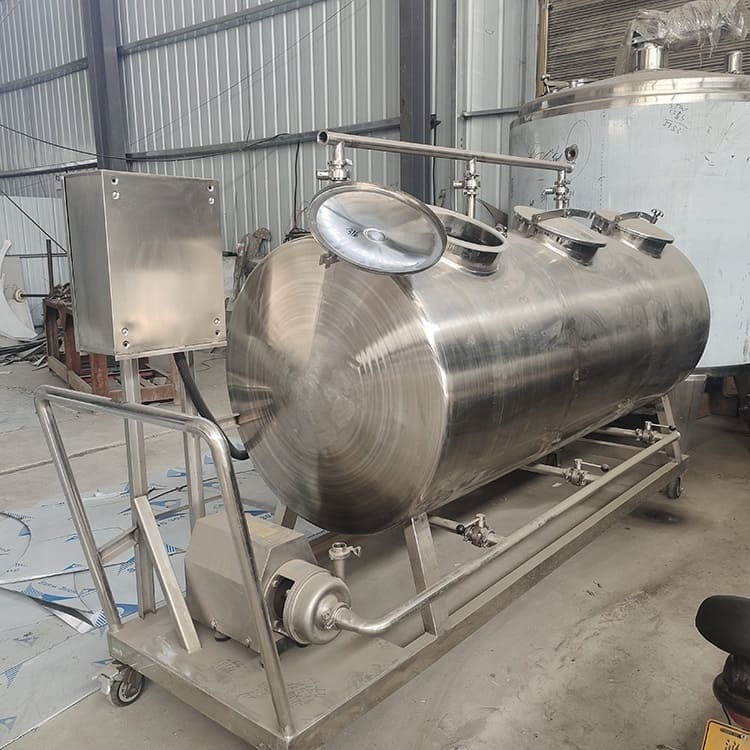
The project includes a 300L × 3 CIP system with stainless steel cleaning tanks, heating and circulation pumps. Product-contact piping and return systems are designed for sanitary cleaning.
A properly configured CIP system reduces the need for frequent manual dismantling and provides a repeatable cleaning procedure for the production line.
Engineering Points to Confirm Before Production
Before manufacturing and installation, several project parameters should be finalized:
- Tea formula: tea variety, extraction ratio, extraction temperature and extraction time.
- Product appearance: whether the pure tea should remain naturally cloudy or have a clear appearance.
- Water quality: actual Russian source-water analysis should be used to finalize RO and pretreatment specifications.
- PET bottle drawing: bottle dimensions and neck finish should be confirmed before manufacturing the filling machine and bottle molds.
- Sterilization process: UHT parameters should be determined according to the final beverage formulation.
- Sugar system: the quotation contains different references to the sugar-dissolving tank capacity, so the final capacity should be confirmed before equipment production.
These details directly affect equipment selection and should be finalized during technical design rather than after installation.
Why This Project Configuration Works
The main advantage of this Russia tea beverage production line is that the equipment is selected according to the complete beverage process rather than treating filling as an independent operation.
The 1,000 L/h UHT system matches the nominal product throughput of 2,000 × 500ml bottles per hour, while the 2 t/h water-treatment system provides sufficient nominal capacity for the beverage process.
The production line also leaves room for different tea formulations, including fruit tea, unsweetened tea and functional beverages.
For beverage manufacturers entering the Russian market, this type of integrated configuration can simplify production management while providing a clear path from raw materials to finished PET bottled products.
FAQ
What capacity is this tea production line designed for?
The filling system is designed for approximately 2,000 500ml bottles per hour, equivalent to about 1,000 L/h of finished beverage.
Can the line produce different types of tea beverages?
Yes. The system can support blended tea, pure tea without additives and functional tea beverages, provided the final formulation and process parameters are confirmed.
Is membrane filtration necessary for pure tea?
Not necessarily. It depends mainly on the required appearance and stability of the finished tea. Clear tea products may require additional clarification, while naturally appearing tea can use conventional filtration.
What bottle is used for this Russia project?
The project is designed around a 500ml PET bottle. The final bottle drawing and neck specifications should be confirmed before equipment manufacturing.
Can the production line be customized?
Yes. Tea extraction, water treatment, blending, sterilization, filling and packaging capacities can be configured according to the product formula, bottle size and required output.
Discuss Your Tea Beverage Project
Planning a tea beverage factory in Russia or another market? The right production line depends on your tea formula, bottle size, target capacity, water source and packaging requirements.
Share your product type, bottle volume and expected output with our engineering team. We can help evaluate the processing flow and develop a suitable tea beverage production line configuration.
Contact Henan Zhongyilong Machinery Equipment Co., Ltd.
Email: zhongyilong@zylpacking.com
WhatsApp: +86 19138171383