
Ready-to-drink tea beverages continue to create new opportunities for beverage manufacturers worldwide. Among them, hibiscus tea beverages are increasingly valued for their distinctive color, refreshing taste, and potential for product differentiation.
Producing a stable bottled hibiscus tea beverage requires more than a filling machine. A complete production system must coordinate water treatment, tea extraction, filtration, ingredient mixing, sugar preparation, sterilization, hygienic cleaning, bottle filling, and final packaging.
For this beverage project in Saudi Arabia, the proposed solution integrates the complete processing and packaging workflow into one coordinated production system. The line is designed to handle multiple PET bottle formats, including 200ml, 250ml, 350ml, and 1.5L bottles.
This article introduces the main process, equipment configuration, and production considerations for a complete hibiscus tea beverage production line designed for the Saudi Arabian market.
Project Overview
The following table provides a general overview of the hibiscus tea beverage production project.
| Project Item | Details |
|---|---|
| Project Location | Saudi Arabia |
| Final Product | Ready-to-Drink Hibiscus Tea Beverage |
| Bottle Material | PET |
| Bottle Sizes | 200ml, 250ml, 350ml, 1.5L |
| Water Treatment Capacity | 3T/H |
| Main Processing | Brewing, Filtration, Mixing and Sterilization |
| Filling Method | PET Bottle Rinsing, Filling and Capping |
| Cleaning System | Automatic CIP System |
| Packaging Equipment | Labeling and Laser Coding |
| Solution Type | Complete Beverage Processing and Filling Line |
The production line combines beverage preparation and downstream packaging equipment, helping manufacturers create a more continuous and organized production process.
What Is a Hibiscus Tea Beverage Production Line?
A hibiscus tea beverage production line is a complete system designed to transform treated water, hibiscus tea extract, sugar syrup, and other approved ingredients into finished ready-to-drink bottled beverages.
The overall production process can be summarized as:
Water Treatment → Hibiscus Tea Brewing → Filtration → Tea Storage → Sugar Preparation → Beverage Mixing → Sterilization → Finished Product Storage → PET Bottle Filling → Capping → Cooling → Drying → Labeling → Coding
Each processing stage must work together to maintain stable production and consistent product quality.
For manufacturers planning a beverage factory in Saudi Arabia, an integrated system can simplify equipment coordination and reduce unnecessary manual handling between production stages.
Water Treatment System
Water is one of the primary ingredients in ready-to-drink tea beverages. Stable water quality is therefore essential for beverage consistency.
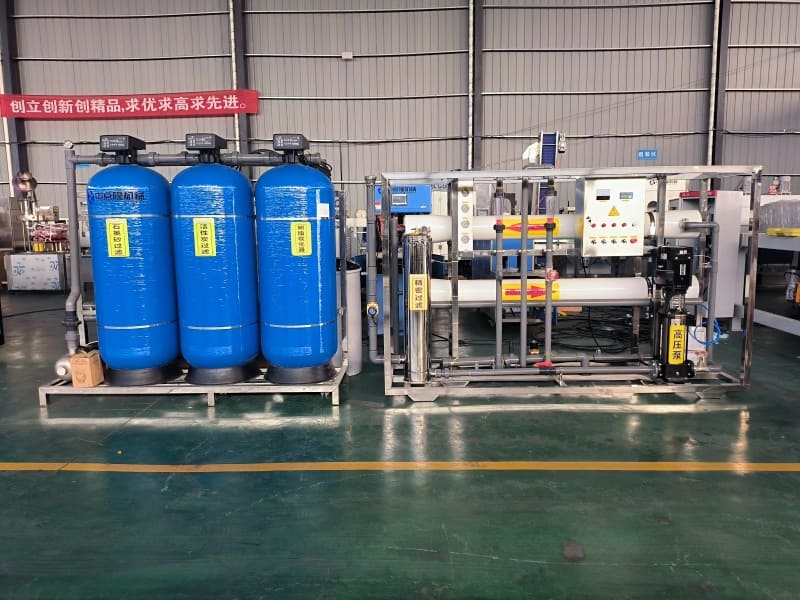
This project includes a 3T/H water treatment system designed to provide treated water for production.
The water treatment section can include:
- Raw water storage
- Quartz sand filtration
- Activated carbon filtration
- Antiscalant dosing
- Reverse osmosis treatment
- Pure water storage
- Constant-pressure water supply
Proper water treatment helps provide a stable foundation for beverage production and supports consistent taste and product quality.
Hibiscus Tea Brewing and Extraction
The brewing system is one of the core sections of the production line.
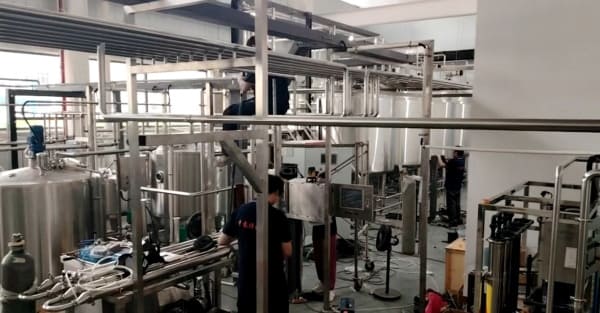
Hibiscus tea is prepared through controlled brewing and extraction using stainless steel brewing tanks with steam heating.
The brewing system is designed to support efficient tea extraction and can include:
- Steam heating
- Internal filtration
- Temperature monitoring
- Liquid level monitoring
- Sanitary connections
- Food-grade stainless steel construction
Multiple brewing tanks can support scheduled or batch-based tea preparation, allowing tea extract to be prepared and supplied to downstream production at planned intervals.
After brewing, the tea liquid is transferred to the filtration and storage section.
Tea Filtration and Storage
After extraction, the hibiscus tea liquid passes through filtration equipment to remove tea particles and suspended materials.
The processing system can include duplex filters and bag filters for tea liquid filtration.
The filtered tea is then transferred to a storage tank.
This storage stage acts as a buffer between tea extraction and beverage mixing.
Buffer storage is important because brewing and beverage filling may operate at different speeds. By separating these stages, the production line can maintain a more stable and continuous workflow.
Sugar Dissolving and Syrup Preparation
Sugar preparation is another important step in ready-to-drink tea beverage production.
The sugar dissolving system uses a heated tank with a high-speed mixing arrangement to prepare sugar syrup.
Steam heating supports efficient sugar dissolution before the syrup enters the main mixing process.
The prepared sugar solution can then be transferred through sanitary pipelines and filtration equipment.
Proper syrup preparation helps reduce the risk of undissolved sugar particles entering the finished beverage.
Hibiscus Tea Beverage Mixing System
After the tea extract and sugar syrup are prepared, they enter the beverage mixing section.
The mixing system combines the main beverage ingredients according to the required product formula.
Typical ingredients may include:
- Hibiscus tea extract
- Treated water
- Sugar syrup
- Other approved beverage ingredients
The mixing tanks are designed to provide controlled agitation and uniform ingredient distribution.
A properly designed mixing system helps manufacturers maintain consistent flavor and product concentration between production batches.
It can also provide flexibility for future beverage product development.
Main Equipment Configuration
The complete production line includes several processing and packaging sections.
| Production Section | Main Equipment | Main Function |
|---|---|---|
| Water Treatment | RO Water Treatment System | Provides treated water for beverage production |
| Tea Brewing | Hibiscus Tea Brewing Tanks | Extracts hibiscus tea |
| Tea Filtration | Duplex and Bag Filters | Removes particles from tea liquid |
| Tea Storage | Insulated Storage Tank | Stores filtered tea before mixing |
| Sugar Preparation | Heated Sugar Dissolving Tank | Prepares sugar syrup |
| Beverage Mixing | Mixing Tanks | Blends ingredients according to the formula |
| Sterilization | Tubular Sterilizer | Processes the beverage before filling |
| CIP Cleaning | Automatic CIP System | Cleans tanks, pipelines and equipment |
| Filling | PET Bottle Filling Machine | Rinses, fills and caps bottles |
| Cooling | Bottle Cooling System | Reduces bottle temperature |
| Drying | Air Knife Dryer | Removes surface moisture |
| Labeling | Automatic Labeling Machine | Applies product labels |
| Coding | Laser Coding Machine | Prints production information |
This integrated equipment configuration helps create a complete workflow from water preparation to finished bottled beverages.
Beverage Filtration and Tubular Sterilization
Before filling, the prepared beverage passes through a final processing stage.
Filtration helps remove unwanted particles and protects downstream equipment.
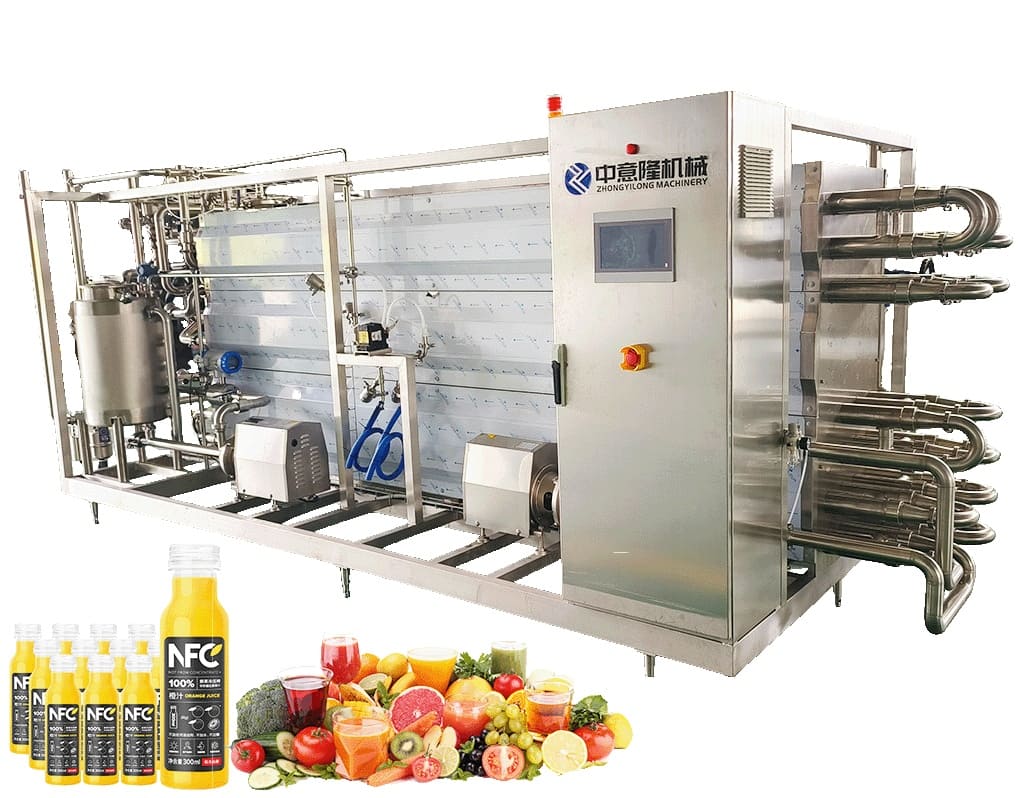
The beverage is then processed through a tubular sterilization system.
For this Saudi Arabia project, the sterilization section is designed for continuous beverage processing and automatic operation.
The final sterilization parameters should be determined according to the beverage formula, product characteristics, and validated food safety requirements.
Using an integrated sterilization system helps connect the beverage preparation process with the filling stage.
Finished Beverage Storage and CIP Cleaning
After sterilization, the processed beverage is transferred to a finished product tank before filling.
The tank provides temporary storage and helps balance production between the processing and filling sections.
Hygienic cleaning is equally important.
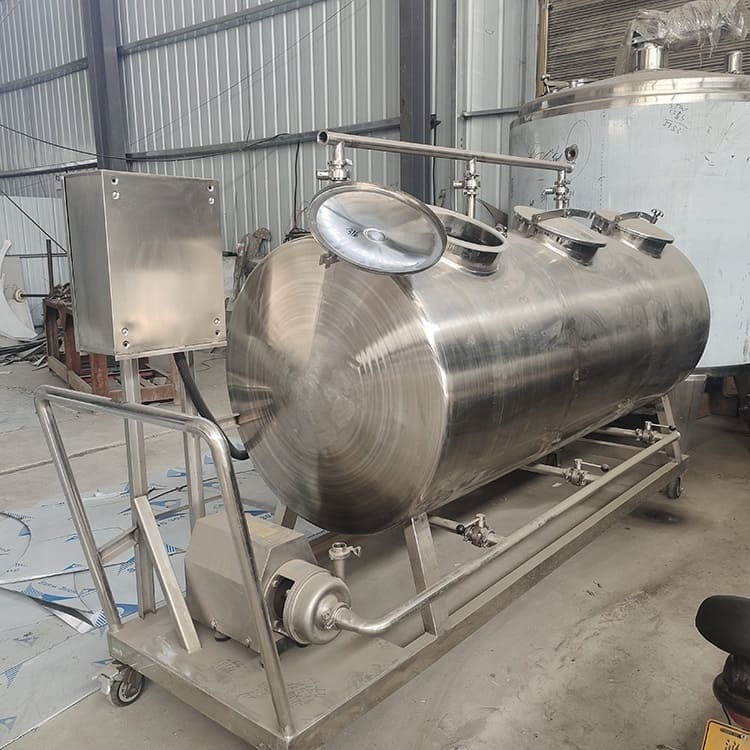
The production line includes an automatic CIP system for cleaning product-contact equipment without frequent manual disassembly.
The CIP system can clean:
- Brewing tanks
- Storage tanks
- Mixing tanks
- Product pipelines
- Pumps
- Heat exchangers
- Other processing equipment
The CIP configuration includes acid and alkali cleaning, hot water circulation, heating equipment, pumps, and automated temperature control.
For beverage manufacturers, an effective CIP system supports hygienic production and improves operational efficiency.
PET Bottle Filling and Capping
The finished beverage is transferred to the PET bottle filling section.
The filling system integrates three major operations:
Bottle Rinsing → Beverage Filling → Bottle Capping
The project is designed to support several PET bottle sizes:
- 200ml
- 250ml
- 350ml
- 1.5L
The final production output depends on bottle size, machine configuration, and operating conditions.
Integrated rinsing, filling, and capping equipment helps reduce bottle handling and supports a more efficient production process.
Reliable capping is also important for maintaining product integrity during transportation and storage.
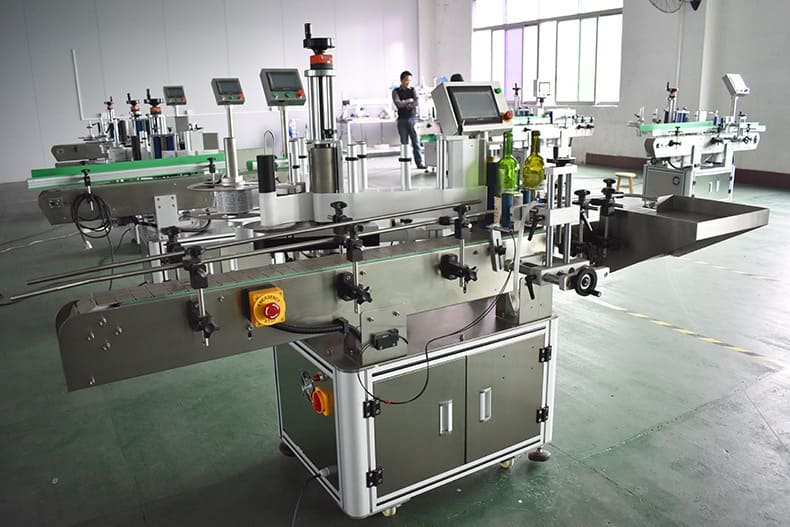
Bottle Cooling, Drying, Labeling and Coding
After filling and capping, bottles move to the downstream packaging section.
The bottles can first pass through a cooling system to reduce product and bottle temperature.
After cooling, an air knife drying machine removes surface moisture.
Dry bottle surfaces are particularly important before self-adhesive labeling.
The automatic labeling machine applies product labels to the finished bottles.
A laser coding system can then mark important production information, including:
- Production date
- Batch number
- Expiration date
- Product identification information
These final packaging processes support product identification and traceability.
Why Choose an Integrated Beverage Production Line?
A complete hibiscus tea beverage production line offers several advantages compared with purchasing individual machines without an overall process design.
Better Process Coordination
The processing and packaging equipment can be designed around the same production requirements.
Improved Production Efficiency
Pumps, pipelines, conveyors, and automation systems connect different production stages.
Hygienic Production
Food-grade processing equipment and automatic CIP cleaning support hygienic manufacturing conditions.
Flexible Packaging
The system can support multiple PET bottle sizes based on market requirements.
Easier Factory Management
An integrated production line provides a more organized workflow from raw material preparation to finished product packaging.
Suitable for Saudi Arabia Beverage Projects
The production solution can be customized according to factory conditions, utilities, product requirements, and market needs in Saudi Arabia and other Middle Eastern countries.
Key Factors When Planning a Beverage Factory in Saudi Arabia
Before purchasing equipment, manufacturers should clearly define their production requirements.
Important considerations include:
| Planning Factor | Why It Matters |
|---|---|
| Production Capacity | Determines equipment size and line configuration |
| Beverage Formula | Affects mixing and processing requirements |
| Bottle Sizes | Determines filling and packaging configuration |
| Factory Layout | Influences equipment arrangement and material flow |
| Water Quality | Determines the required water treatment solution |
| Steam and Utilities | Supports heating and production equipment |
| Automation Level | Affects labor requirements and investment |
| Future Expansion | Allows the factory to increase capacity later |
A successful beverage factory requires proper coordination between processing technology, packaging equipment, utilities, and factory layout.
Conclusion
A complete hibiscus tea beverage production line provides an integrated solution for producing ready-to-drink bottled tea products.
For this project in Saudi Arabia, the production system combines water treatment, hibiscus tea brewing, filtration, tea storage, sugar preparation, beverage mixing, sterilization, CIP cleaning, PET bottle filling, cooling, drying, labeling, and laser coding.
The production line is designed to support multiple PET bottle formats, including 200ml, 250ml, 350ml, and 1.5L bottles.
For beverage manufacturers, selecting a complete production solution rather than individual machines can help improve process coordination and simplify factory management.
The final equipment configuration should always be based on the actual beverage formula, required production capacity, packaging format, factory conditions, available utilities, and future expansion plans.
A properly engineered turnkey beverage production solution can provide a reliable foundation for long-term manufacturing and market development.
FAQ
1. What is included in a hibiscus tea beverage production line?
A complete line can include water treatment equipment, hibiscus tea brewing tanks, filters, storage tanks, sugar dissolving equipment, beverage mixing tanks, sterilization equipment, CIP systems, filling machines, cooling equipment, labeling machines, coding systems, and conveyors.
2. Can the production line handle different PET bottle sizes?
Yes. This project is designed for 200ml, 250ml, 350ml, and 1.5L PET bottles.
3. Why is water treatment important for tea beverage production?
Water is one of the main ingredients in ready-to-drink tea. Proper treatment helps provide stable water quality for beverage processing.
4. What is the purpose of the hibiscus tea brewing system?
The brewing system extracts hibiscus tea under controlled heating and processing conditions before the tea enters filtration and beverage mixing.
5. Why is a CIP system necessary?
The CIP system cleans tanks, pipelines, pumps, heat exchangers, and other product-contact equipment without frequent manual disassembly.
6. What type of sterilizer is used in this production line?
The project includes a tubular sterilization system for continuous beverage processing before filling.
7. Can the production line be customized for Saudi Arabia?
Yes. The equipment configuration can be customized according to local factory conditions, utilities, production requirements, bottle formats, and automation needs.
8. Can this line produce other tea beverages?
Depending on the beverage formula and processing requirements, the production system can potentially be adapted for other ready-to-drink tea products.
Start Your Hibiscus Tea Beverage Production Project
Are you planning to build a hibiscus tea beverage factory in Saudi Arabia or expand your existing beverage production business?
Choosing the right equipment configuration is essential for building an efficient and reliable production process.
A customized solution should be designed around your actual requirements, including:
- Required production capacity
- Beverage formula and processing method
- PET bottle sizes and packaging format
- Factory layout and available space
- Water and steam conditions
- Automation requirements
- Budget considerations
- Future production expansion
Request a Customized Production Solution and Quotation
Our team can help you plan a complete hibiscus tea beverage production line based on your specific project requirements.
Send us your required production capacity, bottle size, beverage type, and factory information. We can provide a customized equipment configuration, production process recommendation, factory layout support, and quotation.
Contact us today to discuss your hibiscus tea beverage production project and receive a customized solution for your factory.