
Water filling lines operate continuously and often at high speeds, so gradual performance degradation is common as equipment ages. Mechanical wear, outdated control systems, calibration drift, and aging hygienic components can all affect production performance.
The good news is that an older water filling line does not always need to be completely replaced. In many cases, a targeted retrofit can restore key functions, improve filling accuracy, reduce water waste, and extend the useful life of the existing equipment.
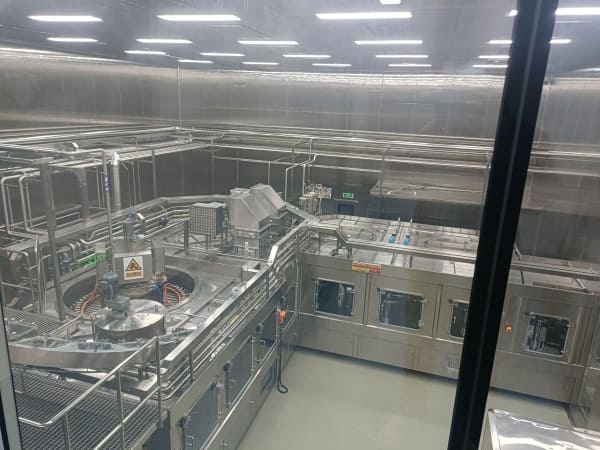
Why Do Water Filling Lines Lose Performance Over Time?
A water filling line combines mechanical, electrical, control, and automation systems. These components operate together continuously, and their performance can gradually change with age and usage.
Common causes include:
- Wear of filling valves, seals, bearings, and other moving parts
- Calibration drift in flow meters and filling systems
- Aging PLCs, HMIs, control cabinets, and electrical components
- Material fatigue affecting sealing and hygienic performance
- Increasing difficulty in sourcing spare parts for older equipment
Even when preventive maintenance is performed regularly, aging components may gradually lose their original precision and reliability.
The effects can appear as lower production efficiency, inconsistent filling volumes, higher water consumption, more frequent downtime, and rising maintenance costs.
What Are the Most Common Problems With Aging Water Filling Lines?
Reduced Throughput and Unstable Line Speed
Declining production speed is often one of the first noticeable signs of an aging bottling line.
Micro-stoppages, speed fluctuations, bottle handling problems, and synchronization issues between rinsing, filling, and capping equipment can reduce actual output.
A machine may still have the same nominal capacity as when it was new, but its real production output can become significantly lower because of frequent short stops and reduced operating stability.
This directly affects Overall Equipment Effectiveness (OEE).
Inconsistent Filling Accuracy and Higher Water Waste
Filling accuracy is particularly important in high-volume bottled water production.
Worn filling valves, unstable pressure conditions, and outdated flow-control systems can cause bottles to be overfilled or underfilled.
Overfilling increases water consumption and product costs. Underfilling can create quality and regulatory concerns.
Even a small filling deviation becomes significant when thousands of bottles are produced every hour.
Rising Maintenance Costs and Spare Parts Problems
Older equipment usually requires more frequent maintenance.
Another challenge is spare parts availability. Components used in legacy bottled water filling machines may no longer be manufactured, or replacement parts may have long lead times.
As a result, maintenance teams can spend more time dealing with unexpected failures and sourcing replacement components.
Outdated PLC and Control Systems
Older control systems may provide limited production data and fewer diagnostic functions than modern automation platforms.
Operators may have difficulty monitoring:
- Production output
- Machine downtime
- Equipment alarms
- Filling performance
- Maintenance conditions
Modernizing the PLC and HMI can provide better visibility and make future automation integration easier.
Hygiene and Compliance Risks
Hygiene requirements for bottled water production are critical, particularly for manufacturers serving different export markets.
Aging seals, worn contact surfaces, outdated cleaning arrangements, or difficult-to-clean areas may increase sanitation risks.
For this reason, a retrofit assessment should consider not only production performance but also the hygienic condition of the equipment.
How Do Aging Filling Valves Affect Filling Accuracy?
Filling valves are among the most important components affecting the consistency of a bottled water filling machine.
As valves and related components wear, their opening and closing behavior may become less consistent. Flow-control components can also lose accuracy over time.
This may result in:
- Different fill levels between bottles
- Higher product rejection rates
- Increased water consumption
- Reduced production consistency
- More frequent adjustments by operators
For high-speed production, maintaining repeatable filling performance is especially important because even small deviations can accumulate into significant material losses.
What Is a Water Filling Line Retrofit?
A water filling line retrofit means upgrading selected parts of an existing production line instead of replacing the entire system.
The scope can range from replacing individual components to modernizing several major systems.
Typical retrofit work may include:
- Replacing filling valves and nozzles
- Upgrading PLC and HMI systems
- Modernizing electrical cabinets and wiring
- Installing updated flow meters and sensors
- Adding servo drives or variable frequency drives (VFDs)
- Improving hygienic design and cleaning-related components
- Upgrading bottle handling and conveyor systems
The appropriate solution depends on the equipment’s current condition, production requirements, and future capacity goals.
How Can a Retrofit Improve Water Filling Line Performance?
1. Improve Line Efficiency and OEE
Modern motion-control and drive technologies can improve synchronization between different machines.
Upgrading critical components can help reduce micro-stoppages, stabilize operating speeds, and remove bottlenecks between production stages.
The result can be higher actual output without necessarily replacing the entire production line.
2. Improve Filling Accuracy and Reduce Water Loss
Modern flow-control technologies can provide more precise control over filling volumes.
Better measurement and control can reduce unnecessary overfilling while maintaining consistent bottle fill levels.
For large-volume production, reducing even a small amount of water loss per bottle can produce meaningful savings over time.
3. Modernize Automation and Production Monitoring
A PLC and HMI upgrade can provide better monitoring and diagnostic capabilities.
Operators can obtain clearer information about machine status, alarms, production performance, and downtime.
Modern automation can also make the line easier to connect with broader digital manufacturing systems where required.
4. Reduce Maintenance Costs and Extend Equipment Life
Replacing obsolete components with currently supported products can simplify maintenance and spare-parts management.
Sensors and monitoring systems can also help identify developing problems before they cause major equipment failures.
This allows maintenance teams to move from mainly reactive repairs toward more planned maintenance.
Which Components Are Good Candidates for Retrofitting?
A complete replacement is not always necessary.
The most common retrofit targets include:
| Component | Potential Benefit |
|---|---|
| Filling valves and nozzles | Better filling consistency and hygiene |
| PLC and HMI | Improved control and diagnostics |
| Electrical cabinets | Better reliability and easier maintenance |
| Flow meters and sensors | More accurate measurement |
| Servo motors and VFDs | Better speed control and energy management |
| Conveyors and bottle handling | Fewer jams and alignment problems |
The best approach is to identify the components that are causing the largest performance losses and prioritize those areas first.
When Should You Retrofit a Water Filling Line Instead of Replacing It?
A retrofit can be a practical option when the core mechanical structure of the line remains in good condition.
It may be worth considering when:
- The existing production capacity is still sufficient
- The line structure and major mechanical components remain serviceable
- Production efficiency has declined with age
- Spare parts are becoming difficult to obtain
- Control systems are outdated
- Filling accuracy has become inconsistent
- A complete replacement would cause excessive downtime
- The available investment budget favors phased modernization
However, retrofit is not always the best solution.
If the main structure, major equipment, or hygienic design is severely deteriorated, replacing the line may provide better long-term value.
A technical inspection and cost-benefit analysis should therefore be completed before making the decision.
Retrofit vs. Complete Replacement
The choice between retrofitting and replacing a water filling line depends on the condition and objectives of the project.
| Factor | Retrofit | Complete Replacement |
|---|---|---|
| Initial investment | Usually lower | Usually higher |
| Downtime | Generally shorter | Generally longer |
| Existing equipment | Retained where suitable | Replaced |
| Modernization scope | Selected systems | Entire line |
| Production capacity | Can often be maintained or improved | Can be redesigned |
| Equipment lifespan | Extended | New service life |
| Best suited for | Serviceable existing lines | Severely outdated or damaged lines |
A retrofit is often attractive when the existing equipment still has a solid mechanical foundation but several critical systems have become outdated.
What Performance Improvements Can Be Expected?
Actual results depend on the age, condition, configuration, and operating environment of the existing line.
Potential improvements may include:
- Higher actual production throughput
- More consistent filling volumes
- Reduced water loss caused by overfilling
- Fewer unexpected stoppages
- Lower maintenance requirements
- Easier spare-parts management
- Improved equipment monitoring
- Extended equipment service life
Some retrofit projects may achieve substantial efficiency gains, but there is no universal improvement percentage. A realistic target should be established after evaluating the existing equipment and production data.
How to Evaluate an Aging Water Filling Line
Before starting a retrofit project, manufacturers should evaluate the complete production system rather than focusing on one machine.
Important factors include:
Production Performance
Review actual output, downtime, speed fluctuations, and bottlenecks.
Filling Accuracy
Check fill-volume consistency and identify sources of overfilling or underfilling.
Mechanical Condition
Inspect filling valves, bearings, seals, conveyors, bottle handling systems, and other high-wear components.
Automation System
Check the condition and availability of PLCs, HMIs, drives, sensors, electrical cabinets, and related components.
Hygiene
Evaluate product-contact surfaces, seals, cleaning accessibility, and other hygienic considerations.
Spare Parts Availability
Determine whether critical components are still supported and whether replacement parts can be obtained reliably.
A structured assessment makes it easier to determine whether a targeted retrofit or complete replacement provides the better long-term solution.
Conclusion
An aging water filling line does not automatically mean that the entire production system must be replaced.
In many cases, the mechanical structure and major equipment can continue operating effectively while outdated filling components, control systems, sensors, drives, and bottle-handling equipment are upgraded.
A well-planned water filling line retrofit can improve filling accuracy, reduce water waste, increase operational stability, simplify maintenance, and extend equipment life.
The key is to identify the actual causes of performance loss and upgrade the components that provide the greatest operational benefit.
For beverage manufacturers, a professional technical assessment is the best starting point for deciding whether retrofit, partial modernization, or complete replacement is the right solution.
FAQ
Can an old water filling line be upgraded?
Yes. If the main mechanical structure remains in good condition, selected components can often be upgraded to improve reliability, filling accuracy, automation, and production efficiency.
What is the most important component to upgrade?
There is no single answer for every line. Filling valves, control systems, sensors, drives, and bottle-handling equipment are common retrofit targets, but the priority should be based on the actual source of performance loss.
Is retrofitting cheaper than replacing a water filling line?
In many cases, yes. Retrofitting selected systems can reduce the initial investment and downtime compared with installing a completely new line. However, a severely outdated or damaged line may be more economical to replace.
Can a retrofit reduce water waste?
Yes. Improving filling accuracy and flow control can reduce unnecessary overfilling, which can lower water consumption and product losses during high-volume production.
How do I know whether my water filling line needs a retrofit?
Start with a technical assessment covering production output, filling accuracy, mechanical condition, automation systems, hygiene, downtime, and spare-parts availability. This information can be used to compare retrofit and replacement costs.
How long can a retrofitted water filling line continue operating?
The additional service life depends on the condition of the existing equipment and the scope of the retrofit. Upgrading critical components while maintaining the core structure can extend the useful life of a production line, but the expected service period should be evaluated on a project-by-project basis.