
Introduction
Foaming during carbonated beverage filling is one of the common challenges faced by beverage manufacturers.
During carbonated drink production, dissolved CO₂ must remain stable from carbonation to filling. Changes in temperature, pressure, liquid flow, or equipment conditions can cause CO₂ release, resulting in excessive bubbles and foam.
For a carbonated beverage filling line, maintaining stable filling conditions is essential for:
- Reducing product loss
- Improving filling accuracy
- Maintaining carbonation levels
- Increasing production efficiency
A properly designed filling system should coordinate temperature control, pressure balance, liquid flow, and equipment operation to achieve stable production.
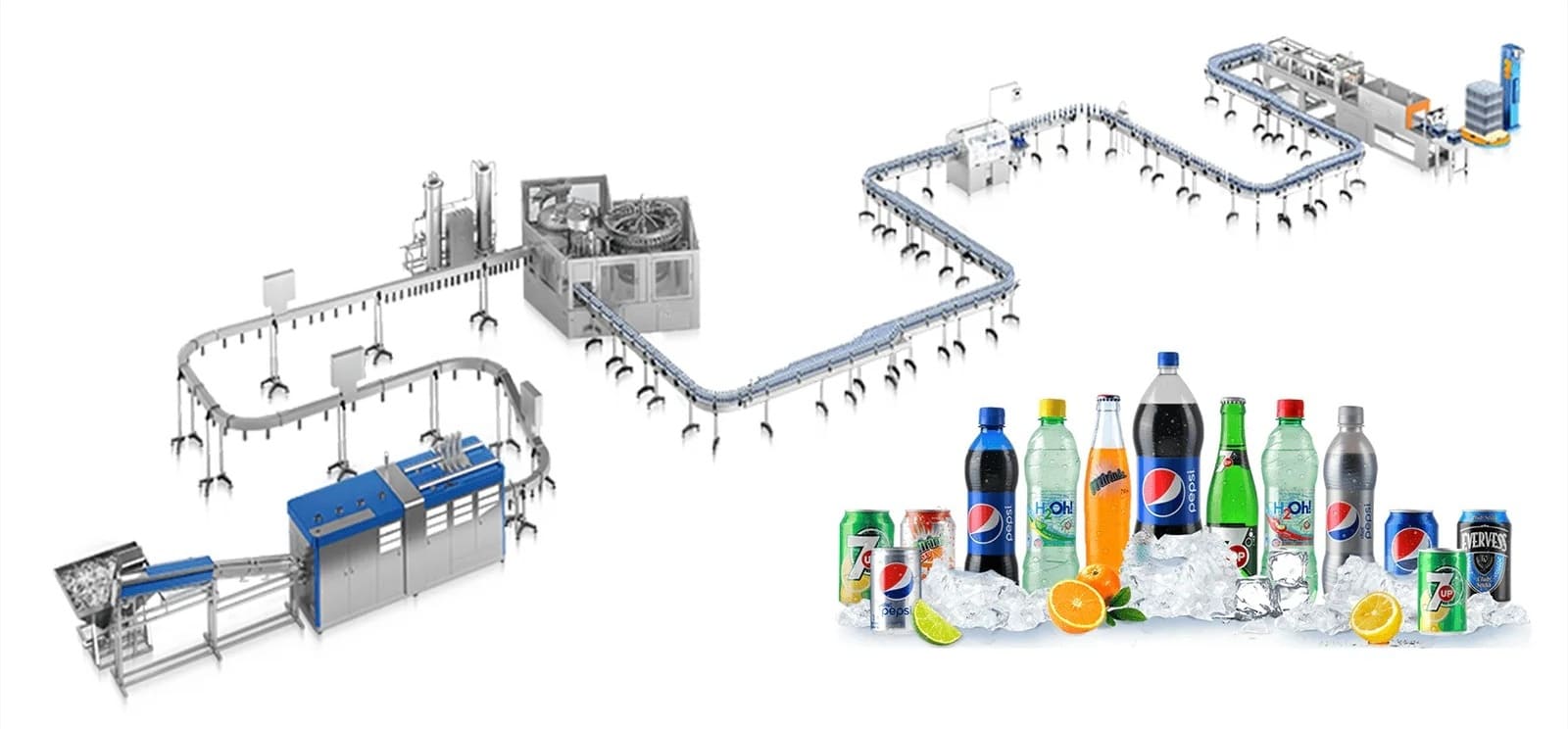
Why Does Carbonated Beverage Filling Create Foam?
Foam formation usually occurs when dissolved CO₂ escapes from the beverage too quickly.
The main causes include:
- Pressure changes
- Temperature increases
- Unstable liquid flow
- Filling valve problems
- Container cleanliness issues
Understanding these factors helps beverage manufacturers improve filling performance and reduce production problems.
1. CO₂ and Pressure Changes
Carbon dioxide dissolves in beverages under pressure.
When beverage temperature increases or pressure suddenly decreases, dissolved CO₂ escapes from the liquid and forms bubbles.
This can create:
- Excessive foam
- Carbonation loss
- Unstable filling
Maintaining stable temperature and pressure between carbonation equipment and filling machines helps preserve carbonation.
Common CO₂ and Pressure Problems
| Cause | Common Sign | Impact |
|---|---|---|
| Pressure drop | Excess bubbles | CO₂ loss |
| Temperature increase | Rapid foaming | Carbonation instability |
| Turbulent flow | Heavy foam | Unstable filling |
| Filling valve issues | Uneven filling | Production delays |
2. Stabilize Temperature and Pressure During Filling
Control Beverage Temperature
Carbonated beverages should remain cool throughout the production process.
Temperature changes in:
- Carbonation tanks
- Transfer pipes
- Filling bowls
can affect CO₂ retention.
Stable cooling conditions help reduce gas release during filling.
Match Carbonation Level and Filling Pressure
Filling conditions should match:
- CO₂ content
- Beverage formula
- Bottle or can type
- Production requirements
Higher carbonation levels generally require more accurate pressure control.
Use Isobaric Filling Technology
An isobaric filling system works by balancing container pressure with filling pressure before the beverage enters the package.
This reduces sudden pressure changes and helps minimize foam formation.
For carbonated beverages, a suitable filling system should maintain stable pressure throughout the filling process.
3. Optimize Filling Flow and Speed
Even when temperature and pressure are controlled, unstable liquid flow can still create foam.
Reduce Liquid Turbulence
Excessive turbulence may occur due to:
- Incorrect pipe design
- Sudden pipe diameter changes
- Unstable pump operation
- High filling speed
A smoother liquid flow reduces splashing and bubble formation.
Check Filling Valves and Nozzles
Filling valves directly influence beverage flow.
Problems such as:
- Blocked nozzles
- Damaged seals
- Incorrect valve timing
may create uneven filling and excessive foam.
Regular inspection and maintenance help maintain stable operation.
Balance Production Speed
The filling speed should match:
- Beverage carbonation level
- Container design
- Downstream packaging speed
A complete carbonated beverage production line requires coordination between:
- Filling
- Capping
- Conveying
- Packaging
to avoid production interruptions.
Foam Troubleshooting Guide
| Symptom | Possible Cause | Check |
|---|---|---|
| Foam at all filling heads | Pressure or temperature problem | CO₂ supply and system settings |
| Foam at several heads | Valve or nozzle issue | Inspect filling components |
| Foam at high speed | Excess turbulence | Adjust filling speed |
4. Check Containers and Hygiene Conditions
Container condition can also affect foaming performance.
Inspect Containers
Possible causes include:
- Dust
- Oil residue
- Cleaning agent residue
- Container temperature differences
Clean and suitable containers help reduce unwanted foam.
Check Sealing Performance
After filling, containers must be sealed quickly to maintain carbonation.
Inspect:
- Bottle caps
- Can seams
- Sealing equipment
Poor sealing can result in CO₂ loss.
Verify CIP and Cleaning Procedures
Cleaning systems should effectively remove:
- Beverage residue
- Cleaning chemicals
- Contaminants
Proper CIP procedures help maintain stable filling conditions.
5. Monitor and Troubleshoot Filling Foam Problems
A modern beverage production line should monitor important operating parameters.
Key parameters include:
- Filling pressure
- Beverage temperature
- Liquid flow
- Fill level
- Filling valve performance
Where available, PLC and HMI systems help operators identify abnormal conditions.
Recommended Troubleshooting Checklist
Before Production
Check:
- Carbonation level
- Beverage temperature
- Filling pressure
- Container condition
- Filling valves
During Production
Monitor:
- Foam level
- Filling accuracy
- Production speed
- Capping synchronization
After Production
Inspect:
- Filling nozzles
- Valves
- Seals
- CIP cleaning results
Record Recurring Problems
Production records help identify whether problems come from:
- The whole filling system
- Pressure conditions
- Individual filling heads
- Equipment maintenance
6. Choosing the Right Carbonated Beverage Filling Solution
Match Production Requirements
When selecting a carbonated beverage filling line, manufacturers should consider:
- Production capacity
- Beverage carbonation level
- Bottle or can format
- Filling accuracy
- Changeover requirements
Equipment selection should consider the complete production process rather than rated speed alone.
Integrate the Complete Production Line
A complete carbonated beverage solution should coordinate:
- Carbonation system
- Cooling system
- Filling machine
- Capping system
- Conveyor system
- Packaging equipment
For PET bottles, a carbonated beverage combiblock can integrate bottle blowing, filling, and capping functions when designed for specific production requirements.
Consider Long-Term Operating Costs
Before investing in equipment, manufacturers should evaluate:
- Maintenance requirements
- Spare parts availability
- Operator training
- Technical support
- Energy consumption
The right filling solution should provide stable operation and practical long-term production value.
About Zhongyilong Carbonated Beverage Filling Solutions
Henan Zhongyilong Machinery Equipment Co., Ltd. provides complete beverage production solutions for global customers.
The company supplies:
- Carbonated beverage production lines
- PET bottle filling systems
- Juice filling lines
- Bottled water production lines
- Complete turnkey beverage factories
With professional engineering experience, Zhongyilong helps beverage manufacturers select suitable equipment configurations according to product requirements, production capacity, and factory conditions.
Learn more:
Contact Us
https://zylpacking.com/contact-us/
Conclusion
Foaming during carbonated beverage filling is usually caused by unstable CO₂ conditions, pressure changes, temperature fluctuations, liquid turbulence, or equipment issues.
A reliable carbonated beverage filling line should maintain coordinated control of temperature, pressure, liquid flow, and filling equipment.
By optimizing filling conditions, maintaining equipment, and selecting the right production system, beverage manufacturers can reduce foam problems, improve product quality, and achieve more stable production.
FAQ
Why does carbonated beverage filling create foam?
Foam occurs when dissolved CO₂ escapes from the beverage due to pressure changes, temperature increases, or unstable liquid flow.
How can foam be reduced during carbonated drink filling?
Foam can be reduced by controlling beverage temperature, maintaining stable pressure, optimizing filling speed, and checking filling valves.
What is isobaric filling?
Isobaric filling balances container pressure with filling pressure before filling, helping reduce CO₂ release and excessive foam.
Does filling speed affect carbonated beverage foam?
Yes. Excessive filling speed can increase turbulence and cause more foam formation.
What equipment is needed for carbonated beverage production?
A complete system usually includes carbonation equipment, cooling systems, filling machines, capping systems, conveyors, and packaging equipment.