
Kenya Tomato Puree Processing Line Project: 200–300 kg/h
Tomato processing offers food manufacturers an opportunity to transform fresh tomatoes into value-added products for the food market. For small and medium-sized processing businesses, choosing suitable equipment is an important step toward establishing an efficient production process.
For a project in Kenya, Zhongyilong Machinery has prepared a tomato puree processing line solution designed to handle 200–300 kg of fresh tomatoes per hour, with the finished product intended for 300 ml glass bottles.
The proposed configuration focuses on essential processing and packaging operations, making it a practical option for businesses seeking a semi-automatic tomato puree production system.
Project Overview
- Project location: Kenya, Africa
- Product: Tomato puree
- Fresh tomato processing capacity: 200–300 kg/h
- Packaging format: 300 ml glass bottles
- Proposed production configuration: Primarily semi-automatic
- Equipment supplier: Henan Zhongyilong Machinery Equipment Co., Ltd.
1. Project Requirements and Production Goals
The project is based on fresh tomatoes as the raw material, with a planned processing capacity of 200–300 kg per hour.
At this production scale, equipment selection should consider the characteristics of fresh tomatoes, the required processing steps, the desired puree consistency, and the final packaging format.
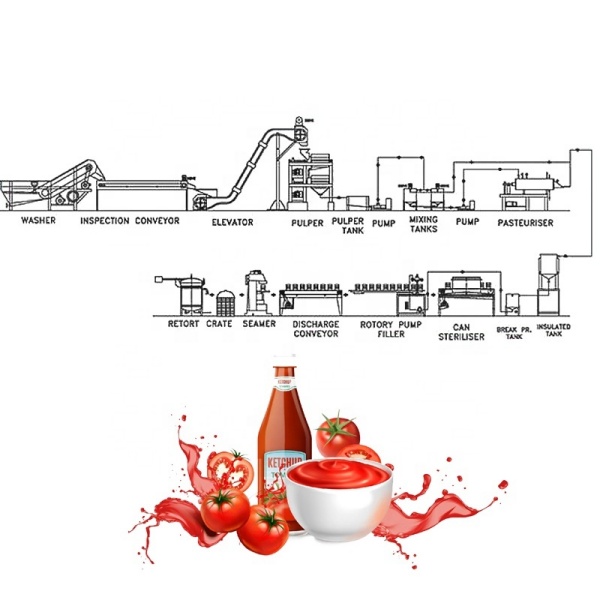
The proposed line combines washing, pulping, screening, concentration, heating, filling, and labeling equipment. These machines are intended to work together as a processing system, with pumps, buffer tanks, piping, and supporting equipment connecting the main stages.
The solution uses a primarily semi-automatic configuration. This allows operators to participate in material handling and packaging operations while mechanical equipment performs the main processing tasks.
Before final equipment commissioning, the actual processing parameters should be confirmed according to tomato variety, raw material condition, target product specifications, and local utility conditions.
2. Tomato Puree Production Process
The proposed production line includes the following main processing stages.
Step 1: Fresh Tomato Washing
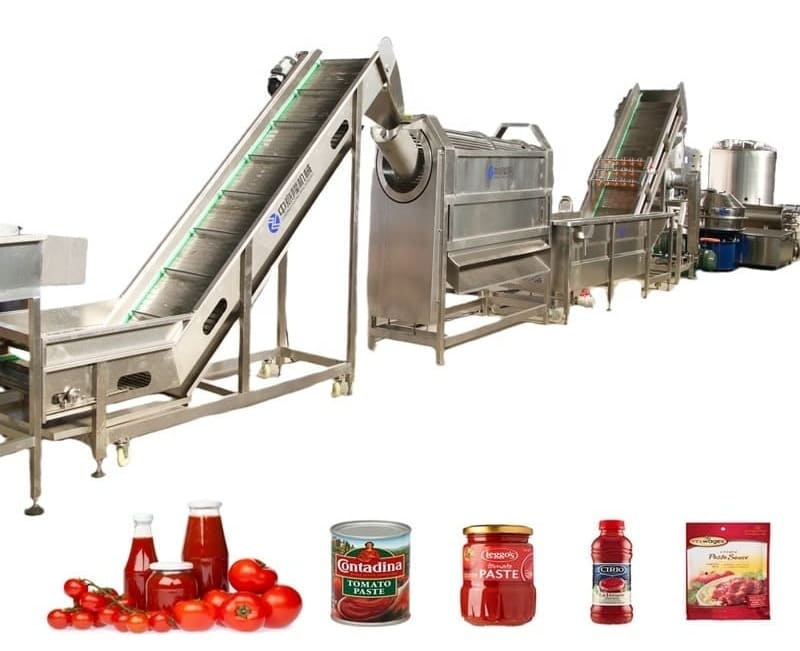
Fresh tomatoes enter a bubble washing machine equipped with a lifting system.
The machine uses bubbling action to agitate the tomatoes in water, helping remove surface dirt and impurities. The lifting system then transfers the cleaned tomatoes to the next processing stage.
The specified washing machine has a nominal model capacity of 0.5 t/h and is constructed from SUS304 stainless steel.
Its listed capacity is higher than the project’s target raw material throughput of 200–300 kg/h. Actual operating throughput will depend on feeding conditions and the overall line configuration.
Step 2: Tomato Pulping and Refining
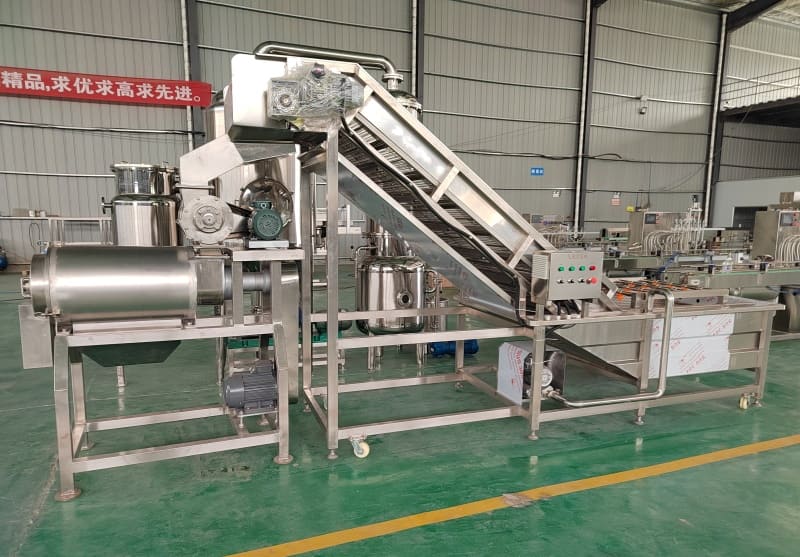
After washing, the tomatoes are processed by a double-stage pulping machine.
The equipment is designed to separate the tomato pulp from unwanted coarse materials, helping produce a more uniform intermediate product for further processing.
The proposed pulping machine is made of SUS304 stainless steel. Its two stages have listed motor powers of 5.5 kW and 4 kW, respectively, with a nominal model capacity of 0.5 t/h.
The appropriate screen configuration and processing settings should be confirmed according to the required puree texture and the characteristics of the raw tomatoes.
Step 3: Buffering, Pumping, and Screening
After pulping, the tomato pulp passes through buffer tanks, sanitary centrifugal pumps, and a vibrating screen.
The buffer tanks help provide intermediate holding capacity between processing stages, while the pumps transfer the product through the system.
The proposed vibrating screen has a diameter of 800 mm and an adjustable screen configuration. It is intended to remove coarse particles and improve the consistency of the processed material.
These components support product transfer and help coordinate the operation of the processing equipment.
Step 4: Tomato Puree Concentration
The proposed line includes a double-effect concentrator with a listed capacity of 500 L.
The concentration stage is intended to reduce the water content of the tomato pulp and help achieve the required product concentration.
A double-effect concentration system uses heat more efficiently than a comparable single-effect arrangement under suitable operating conditions. Actual energy consumption and evaporation performance depend on the equipment design, operating parameters, and product characteristics.
The required final concentration, processing temperature, and residence time should be established according to the intended product specification.
Because the source equipment list specifies the concentrator in liters rather than kilograms per hour of evaporation, its actual evaporation capacity should be confirmed during detailed engineering.
Step 5: Heating and Product Preparation
The proposed configuration includes a 300 L stainless steel jacketed kettle with stirring and wall-scraping functions.
The kettle uses steam heating and is designed to heat and mix the tomato product. Scraping the vessel wall helps reduce product accumulation on heated surfaces and supports more uniform mixing.
A screw pump transfers the product between relevant stages, while a stainless steel pipeline filter provides an additional filtration point before filling.
The exact heating temperature, holding time, and product preparation procedure should be established through process design and validation. These parameters are important for achieving the intended product quality and food safety requirements.
Step 6: Filling Tomato Puree into 300 ml Glass Bottles
The packaging section is designed around 300 ml glass bottles.
The proposed equipment includes a semi-automatic single-head piston filling machine with an adjustable filling range of 50–500 ml. This range covers the specified 300 ml bottle size.
The piston filling mechanism is suitable for products that require controlled volumetric filling. Actual filling accuracy and speed depend on product viscosity, temperature, filling settings, and operator handling.
A semi-automatic capping machine is also included. It is designed for glass bottles with manually loaded caps.
This arrangement is intended for businesses that prefer a relatively simple packaging setup rather than a fully automatic high-speed filling and capping line.
Step 7: Heating Treatment, Labeling, and Coding
The proposed packaging section also includes a stainless steel heating tank, a circular bottle labeling machine, and an inkjet coding machine.
The heating tank has a listed adjustable temperature range of 45–93°C and uses steam heating. The appropriate treatment conditions must be determined through a validated process based on the product’s pH, formulation, packaging, and intended shelf life.
The listed temperature range alone does not establish that the finished product will be commercially sterile or shelf-stable. The complete thermal process, bottle and closure suitability, cooling procedure, and microbiological requirements must be evaluated by a qualified food-processing specialist.
After the required treatment, the labeling machine applies labels to round bottles. The inkjet coding machine can be used to print batch or date information, subject to the final configuration.
3. Main Equipment Configuration
The following table summarizes the principal equipment in the proposed Kenya tomato puree processing line.
| Equipment | Main specification or function |
|---|---|
| Bubble washing and lifting machine | SUS304 stainless steel; nominal model capacity 0.5 t/h |
| Double-stage pulping machine | SUS304 stainless steel; 5.5 kW and 4 kW stage motors |
| Buffer tanks | Stainless steel; listed capacities of 300 L |
| Sanitary centrifugal pumps | Listed flow rate of 1 t/h |
| Vibrating screen | 800 mm diameter; adjustable screen |
| Double-effect concentrator | Listed capacity of 500 L |
| Screw pumps | SUS304 stainless steel; listed motor power 0.55 kW |
| Jacketed kettle | 300 L; steam heating, stirring, and wall scraping |
| Pipeline filter | SUS304 stainless steel |
| Semi-automatic piston filling machine | Adjustable filling range of 50–500 ml |
| Semi-automatic capping machine | Designed for glass bottles; manual cap loading |
| Heating treatment tank | Adjustable temperature range of 45–93°C |
| Round bottle labeling machine | Single-label configuration; coding ribbon listed |
| Inkjet coding machine | Printing head and support included |
| Steam generator | Listed as a 1,000 L unit; steam output and technical rating require confirmation |
| Piping and electrical system | Piping, fittings, cables, cable trays, and control cabinet |
The equipment list also includes product transfer components and supporting connections required to integrate the main processing stages.
Before manufacturing and installation, the supplier and buyer should confirm the final equipment arrangement, electrical requirements, steam supply, water consumption, cleaning procedures, and the expected output of the complete line.
4. Why Choose a Semi-Automatic Tomato Puree Processing Line?
For a project processing 200–300 kg of fresh tomatoes per hour, a semi-automatic configuration may be appropriate when the investment budget, available labor, and expected market demand favor a smaller production setup.
Key considerations include:
A production capacity suited to the project
The proposed processing target is 200–300 kg/h of fresh tomatoes. This provides a starting point for planning raw material supply, production scheduling, and equipment selection.
Integrated processing stages
The proposed equipment covers washing, pulping, screening, concentration, heating, filling, capping, and labeling. Integrating these stages helps organize the production process and reduce the need to source every machine separately.
Flexible bottle filling
The specified piston filling machine supports filling volumes from 50 to 500 ml, including the planned 300 ml glass bottle format.
A practical automation level
Semi-automatic filling and capping equipment requires operator involvement. This configuration may be suitable for businesses that prioritize a straightforward operating setup, although labor requirements and actual output must be assessed before purchase.
Room for process optimization
The equipment layout and operating parameters should be finalized after the buyer confirms the target puree consistency, packaging requirements, processing schedule, and applicable food safety standards.
5. Key Considerations Before Starting Tomato Puree Production
Selecting the machinery is only one part of establishing a tomato processing facility. Several technical details should be confirmed before the project moves into manufacturing and installation.
Raw Material and Product Specifications
Tomato variety, maturity, solids content, and incoming quality can affect pulping performance, concentration requirements, and finished product consistency.
The buyer should specify the desired puree characteristics, including final soluble solids or other applicable product quality indicators.
Actual Line Throughput
The washing and pulping machines have listed model capacities of 0.5 t/h, while the project targets 200–300 kg/h of fresh tomatoes.
These ratings do not automatically establish the output of the complete line. The concentrator’s evaporation performance, intermediate holding capacity, heating process, and manual packaging operations may influence overall production capacity.
The complete system should therefore be checked against the expected hourly output and daily production schedule.
Packaging and Thermal Processing
The planned 300 ml glass bottle format requires compatible bottles, closures, filling conditions, and a suitable thermal processing procedure.
The required treatment must be established according to the product formulation and intended shelf life. Commercial production should not begin until the relevant food safety and packaging requirements have been verified.
Utilities and Factory Conditions
The equipment list specifies a 380 V supply for the bubble washing machine and includes a steam generator and steam-heated equipment.
The buyer should confirm local electrical specifications, steam requirements, water supply, drainage, cleaning facilities, and the available installation space. Utility ratings and compatibility should be verified for the complete equipment package.
Installation, Cleaning, and Operator Training
A well-planned layout should provide suitable access for material handling, cleaning, maintenance, and safe operation.
Cleaning procedures, food-contact materials, and operating instructions should be reviewed before production begins. Installation and commissioning arrangements should also be agreed upon with the equipment supplier.
6. About Zhongyilong Machinery
Henan Zhongyilong Machinery Equipment Co., Ltd. is a Chinese manufacturer of beverage and food processing and packaging equipment.
The company provides equipment and production line solutions for applications including bottled water, juice, carbonated beverages, and other liquid food products.
For tomato puree processing projects, the proposed equipment combination can be reviewed and adjusted according to raw material throughput, product characteristics, packaging format, automation requirements, and factory conditions.
Each project should be evaluated individually to establish a suitable processing configuration and verify the technical requirements before equipment manufacturing.
To discuss a tomato puree processing project, visit the Zhongyilong Machinery contact page or contact the engineering team through the company’s official website.
Conclusion
The proposed Kenya tomato puree processing line is designed for 200–300 kg/h of fresh tomatoes and a finished product packaged in 300 ml glass bottles.
Its equipment configuration covers the main processing stages, from washing and pulping to concentration, heating, filling, capping, and labeling. The primarily semi-automatic arrangement offers a potential starting point for a small or medium-sized tomato processing operation.
The final equipment selection and expected production output should be confirmed against the required product specifications, thermal processing conditions, packaging materials, and local factory utilities.
For businesses planning to process tomatoes in Kenya, careful process design and equipment matching are important steps toward establishing a practical and reliable production facility.
Frequently Asked Questions
1. What is the processing capacity of the Kenya tomato puree production line?
The proposed project is designed to process 200–300 kg of fresh tomatoes per hour. Actual finished product output will depend on raw material characteristics, concentration requirements, processing losses, and packaging efficiency.
2. What bottle size is specified for this tomato puree project?
The planned packaging format is a 300 ml glass bottle. The proposed semi-automatic piston filling machine has an adjustable filling range of 50–500 ml, which includes the specified bottle size.
3. What equipment is included in the tomato puree processing line?
The proposed configuration includes a bubble washing and lifting machine, double-stage pulping machine, buffer tanks, sanitary pumps, vibrating screen, double-effect concentrator, jacketed kettle, pipeline filter, semi-automatic filling and capping machines, heating tank, labeling machine, coding machine, and supporting utility equipment.
4. Is the Kenya tomato puree line fully automatic?
No. The proposed configuration is primarily semi-automatic. The filling machine has a single head, and the capping machine requires manual cap loading. Operators will therefore be involved in some production and packaging operations.
5. Can the tomato puree line produce shelf-stable products?
The equipment list includes a heating treatment tank, but the listed temperature range alone does not establish commercial sterility or shelf stability. The appropriate thermal process depends on product formulation, pH, packaging, and intended storage conditions and must be validated before commercial production.
6. How is the final production capacity determined?
The complete line’s capacity depends on the performance of each processing stage, including pulping, concentration, heating, and packaging. A detailed engineering review is necessary to confirm the overall throughput and identify potential bottlenecks.
7. What should a buyer confirm before ordering a tomato puree processing line?
The buyer should confirm the fresh tomato processing target, desired puree consistency, final product specifications, bottle and closure requirements, thermal processing method, local utilities, factory layout, and expected production schedule. These details help the supplier determine the appropriate equipment configuration.